科纳克太阳神庙
旅行指南


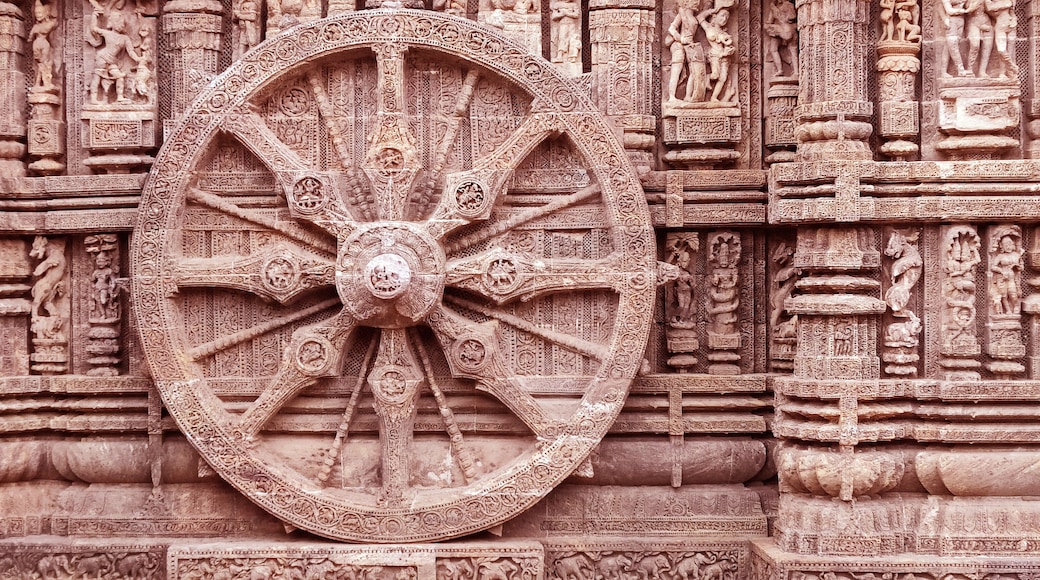
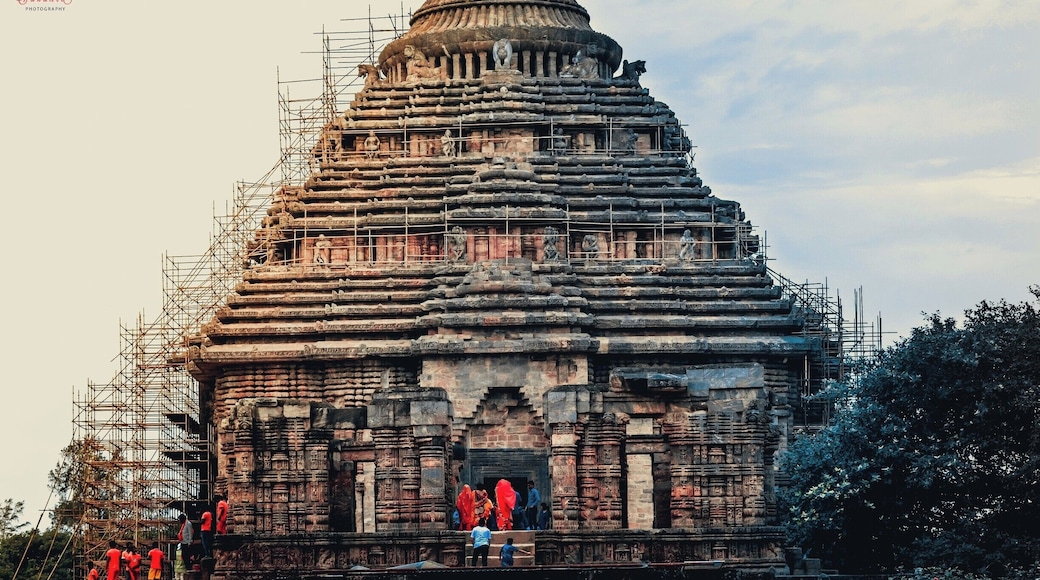
![Konark Sun Temple is a 13th-century CE Sun Temple at Konark in Orissa, India. It is believed that the temple was built by king Narasimhadeva I of Eastern Ganga Dynasty[2] in 1255 CE.[3] The temple complex is in the shape of a gigantic chariot, having elaborately carved stone wheels, pillars and walls. A major part of the structure is now in ruins. The temple is a UNESCO World Heritage Site[4] and has also featured on various list of Seven Wonders of India. The temple is 35 km from Puri and 65 km from Bhubaneswar.
The name Konark derives from the combination of the Sanskrit words, Kona (corner or angle) and Ark (the sun), in reference to the temple which was dedicated to the Sun God Surya.[4]
The monument was also called the Black Pagoda'(Kaala Pagoda) by the European sailors. In contrast, the Jagannath Temple in Puri was called the White Pagoda. Both temples served as important landmarks for the sailors.[5] Konark Sun Temple used Iron beams for its structure.
The temple was originally built at the mouth of the river Chandrabhaga, but the waterline has receded since then. The temple has been built in the form of a giant ornamented chariot of the Sun god, Surya. It has twelve pairs of elaborately carved stone wheels which are 3 meters[4] wide and is pulled by a set of seven horses (4 on the right and 3 on the left).[6] The temple follows the traditional style of Kalinga architecture. It is carefully oriented towards the east so that the first rays of sunrise strikes the principal entrance.[4] The temple is built from Khondalite rocks.[7][8]
The original temple had a main sanctum sanctorum (vimana), which was supposedly 229 feet[6] (70 m) tall. Due to the weight of the superstructure (70 m tall) and weak soil of the area, the main vimana fell in 1837.[9] The audience hall (Jagamohana), which is about 128 feet (39 m) tall, still stands and is the principal structure in the surviving ruins. Among the structures, which have survived to the current day, are the dance hall (Nata mandira) and dining hall (Bhoga mandapa).[4][6]
The Konark temple is also known for its erotic sculptures of maithunas.[10]
Two smaller ruined temples have been discovered nearby. One of them is called the Mayadevi Temple and is located southwest from the entrance of the main temple. It is presumed to have been dedicated to Mayadevi, one of the Sun god's wives. It has been dated to the late 11th century, earlier than the main temple.[11] The other one belongs to some unknown Vaishnava deity. Sculptures of Balarama, Varaha and Trivikrama have been found at the site, indicating it to be a Vaishnavite temple. Both temples have their primary idols missing.
A collection of fallen sculptures can be viewed at the Konark Archaeological Museum which is maintained by the Archaeological Survey of India.](https://images.trvl-media.com/place/6156018/09fea146-89a8-4536-94db-75e3922ba387.jpg?impolicy=fcrop&w=1040&h=580&q=mediumHigh)

梅费尔遗产,普里酒店
Chakratirtha Road Puri Orissa
3月24日到 3月25日的每晚价格 HK$1,176
HK$1,176
总价 HK$1,405
3 月 24 日 - 3 月 25 日
包含税费
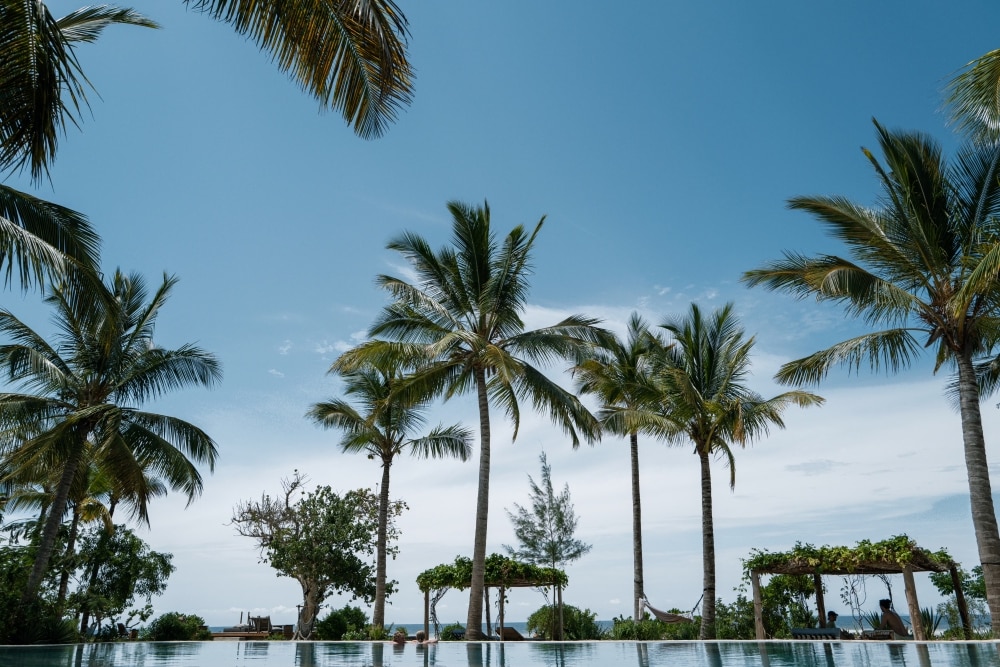
入住布里的这家海滩酒店。客人可使用免费 WiFi、免费停车设施和全套 SPA 服务。附近有热门景点贾格纳寺和苏达山工艺博物馆。
8.2/10 Very Good! (41 条点评)
Heritage cultural touches add to the charm. Onsite very clean beach. Staff very helpful. Nice restaurants and bars onsite. Good sized room.
点评日期:2026 年 2 月 14 日

假日酒店度假村
Chakratirtha Road Puri Orissa
3月20日到 3月21日的每晚价格 HK$337
HK$337
总价 HK$355
3 月 20 日 - 3 月 21 日
包含税费
入住布里的这家海滩酒店。客人可使用免费停车设施、海滩和客房送餐服务。附近有热门景点贾格纳寺和苏达山工艺博物馆。
8/10 Very Good! (19 条点评)
Carpet was super dirty, blanket had stain, no room services next day, front desk was very rude. Wasn’t worth it, nothing they showed in pictures . I wouldn’t recommend anyone again.
点评日期:2026 年 1 月 12 日

梅费尔海浪酒店
Chakratirtha Road Puri Orissa
3月31日到 4月1日的每晚价格 HK$930
HK$930
总价 HK$1,111
3 月 31 日 - 4 月 1 日
包含税费
入住布里的这家海滩酒店。客人可使用免费 WiFi、免费停车设施和海滩。附近有热门景点贾格纳寺和苏达山工艺博物馆。
8.2/10 Very Good! (25 条点评)
Yes staff is very helpful I booked two room premium king with sea view at photo But when I checked in two room one 2219 is that room which I like at time booking I have idea same room But another room I received fon r suddhachitta Roy is not same room which I looking for it is on 1st floor no sea ...
点评日期:2026 年 2 月 20 日
基于过去 24 小时内找到的、2 位成人 1 晚住宿的每晚最低价格。价格和供应情况可能会有所变动。可能需遵守其他条款。

Shonar Kutir 1 Bhk AC Resort
Puri OD
入住布里的这家公寓。客人可使用免费 WiFi和阳台。附近有热门景点贾格纳寺和纳伦达萨格。

2BHK Homestay @ Gundicha Temple Best 4 Ratha Yatra
Puri OD
入住布里的这家度假屋。客人可使用洗衣设施和空调。附近有热门景点贾格纳寺和苏达山工艺博物馆。

Sindhu Holiday Homes
Badasirei OD
入住布里的这家公寓。客人可使用有线/卫星电视和空调。附近有热门景点贾格纳寺和苏达山工艺博物馆。
基于过去 24 小时内找到的、2 位成人 1 晚住宿的每晚最低价格。价格和供应情况可能会有所变动。可能需遵守其他条款。
![Konark Sun Temple is a 13th-century CE Sun Temple at Konark in Orissa, India. It is believed that the temple was built by king Narasimhadeva I of Eastern Ganga Dynasty[2] in 1255 CE.[3] The temple complex is in the shape of a gigantic chariot, having elaborately carved stone wheels, pillars and walls. A major part of the structure is now in ruins. The temple is a UNESCO World Heritage Site[4] and has also featured on various list of Seven Wonders of India. The temple is 35 km from Puri and 65 km from Bhubaneswar.
The name Konark derives from the combination of the Sanskrit words, Kona (corner or angle) and Ark (the sun), in reference to the temple which was dedicated to the Sun God Surya.[4]
The monument was also called the Black Pagoda'(Kaala Pagoda) by the European sailors. In contrast, the Jagannath Temple in Puri was called the White Pagoda. Both temples served as important landmarks for the sailors.[5] Konark Sun Temple used Iron beams for its structure.
The temple was originally built at the mouth of the river Chandrabhaga, but the waterline has receded since then. The temple has been built in the form of a giant ornamented chariot of the Sun god, Surya. It has twelve pairs of elaborately carved stone wheels which are 3 meters[4] wide and is pulled by a set of seven horses (4 on the right and 3 on the left).[6] The temple follows the traditional style of Kalinga architecture. It is carefully oriented towards the east so that the first rays of sunrise strikes the principal entrance.[4] The temple is built from Khondalite rocks.[7][8]
The original temple had a main sanctum sanctorum (vimana), which was supposedly 229 feet[6] (70 m) tall. Due to the weight of the superstructure (70 m tall) and weak soil of the area, the main vimana fell in 1837.[9] The audience hall (Jagamohana), which is about 128 feet (39 m) tall, still stands and is the principal structure in the surviving ruins. Among the structures, which have survived to the current day, are the dance hall (Nata mandira) and dining hall](https://images.trvl-media.com/place/6156018/09fea146-89a8-4536-94db-75e3922ba387.jpg?impolicy=fcrop&w=900&h=506&q=mediumHigh)