搜尋布巴內斯瓦爾當地玩樂 | 布巴內斯瓦爾必玩熱門旅遊景點與一日遊行程及門票

活動、景點及導賞團

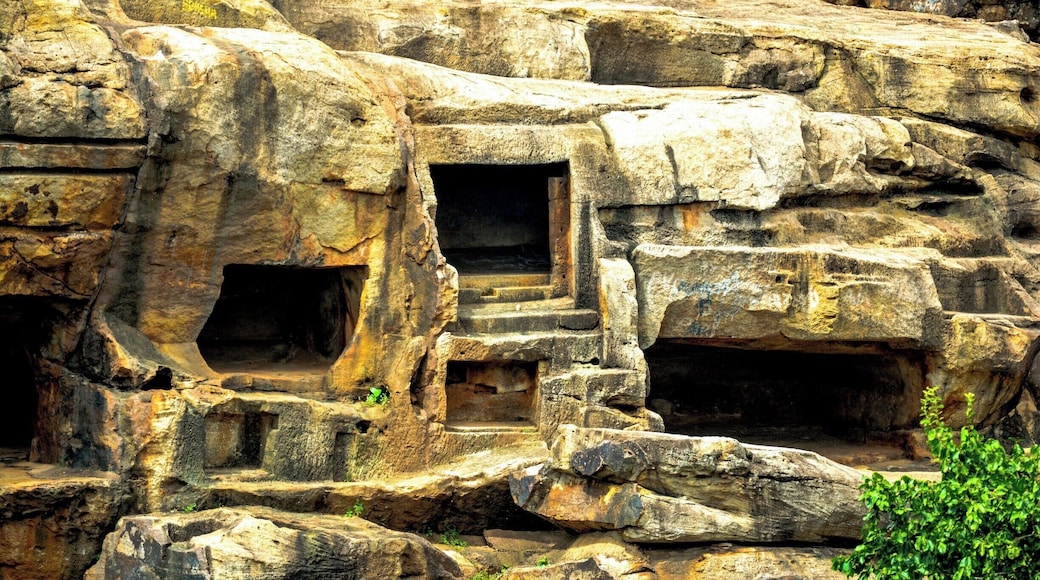
Udayagiri and Khandagiri Caves are partly natural and partly artificial caves of archaeological, historical and religious importance near the city of Bhubaneswar in Odisha, India. The caves are situated on two adjacent hills, Udayagiri and Khandagiri, mentioned as Kumari Parvat in the Hathigumpha inscription. They have a number of finely and ornately carved caves built during 2nd century BCE. It is believed that most of these caves were carved out as residential blocks for Jain monks during the reign of King Kharavela. Udayagiri means "Sunrise Hill" and has 18 caves while Khandagiri has 15 caves.

The caves of Udayagiri and Khandagiri, called lena or leṇa in the inscriptions, were dug out mostly during the reign of Kharavela for the abode of Jaina ascetics. The most important of this group is Ranigumpha in Udayagiri which is a double storeyed monastery. Other important caves include Hathi gumpha, Ananta gumpha, Ganesha gumpha, Jaya Vijaya gumpha, Mancapuri gumpha, Bagh gumpha and Sarpa gumpha.
Udayagiri and Khandagiri Caves are partly natural and partly artificial caves of archaeological, historical and religious importance near the city of Bhubaneswar in Odisha, India. The caves are situated on two adjacent hills, Udayagiri and Khandagiri, mentioned as Kumari Parvat in the Hathigumpha inscription. They have a number of finely and ornately carved caves built during 2nd century BCE. It is believed that most of these caves were carved out as residential blocks for Jain monks during the reign of King Kharavela. Udayagiri means "Sunrise Hill" and has 18 caves while Khandagiri has 15 caves.

The caves of Udayagiri and Khandagiri, called lena or leṇa in the inscriptions, were dug out mostly during the reign of Kharavela for the abode of Jaina ascetics. The most important of this group is Ranigumpha in Udayagiri which is a double storeyed monastery. Other important caves include Hathi gumpha, Ananta gumpha, Ganesha gumpha, Jaya Vijaya gumpha, Mancapuri gumpha, Bagh gumpha and Sarpa gumpha.
Udayagiri and Khandagiri Caves are partly natural and partly artificial caves of archaeological, historical and religious importance near the city of Bhubaneswar in Odisha, India. The caves are situated on two adjacent hills, Udayagiri and Khandagiri, mentioned as Kumari Parvat in the Hathigumpha inscription. They have a number of finely and ornately carved caves built during 2nd century BCE. It is believed that most of these caves were carved out as residential blocks for Jain monks during the reign of King Kharavela. Udayagiri means "Sunrise Hill" and has 18 caves while Khandagiri has 15 caves.

The caves of Udayagiri and Khandagiri, called lena or leṇa in the inscriptions, were dug out mostly during the reign of Kharavela for the abode of Jaina ascetics. The most important of this group is Ranigumpha in Udayagiri which is a double storeyed monastery. Other important caves include Hathi gumpha, Ananta gumpha, Ganesha gumpha, Jaya Vijaya gumpha, Mancapuri gumpha, Bagh gumpha and Sarpa gumpha.
Udayagiri and Khandagiri Caves are partly natural and partly artificial caves of archaeological, historical and religious importance near the city of Bhubaneswar in Odisha, India. The caves are situated on two adjacent hills, Udayagiri and Khandagiri, mentioned as Kumari Parvat in the Hathigumpha inscription. They have a number of finely and ornately carved caves built during 2nd century BCE.[1] It is believed that most of these caves were carved out as residential blocks for Jain monks during the reign of King Kharavela.[2] Udayagiri means "Sunrise Hill" and has 18 caves while Khandagiri has 15 caves.[3]

The caves of Udayagiri and Khandagiri, called lena or leṇa in the inscriptions, were dug out mostly during the reign of Kharavela for the abode of Jaina ascetics. The most important of this group is Ranigumpha in Udayagiri which is a double storeyed monastery. Other important caves include Hathi gumpha, Ananta gumpha, Ganesha gumpha, Jaya Vijaya gumpha, Mancapuri gumpha, Bagh gumpha and Sarpa gumpha.
Udayagiri and Khandagiri Caves are partly natural and partly artificial caves of archaeological, historical and religious importance near the city of Bhubaneswar in Odisha, India. The caves are situated on two adjacent hills, Udayagiri and Khandagiri, mentioned as Kumari Parvat in the Hathigumpha inscription. They have a number of finely and ornately carved caves built during 2nd century BCE.[1] It is believed that most of these caves were carved out as residential blocks for Jain monks during the reign of King Kharavela.[2] Udayagiri means "Sunrise Hill" and has 18 caves while Khandagiri has 15 caves.[3]

The caves of Udayagiri and Khandagiri, called lena or leṇa in the inscriptions, were dug out mostly during the reign of Kharavela for the abode of Jaina ascetics. The most important of this group is Ranigumpha in Udayagiri which is a double storeyed monastery. Other important caves include Hathi gumpha, Ananta gumpha, Ganesha gumpha, Jaya Vijaya gumpha, Mancapuri gumpha, Bagh gumpha and Sarpa gumpha.

  • find price illustration

    探索活動

    由活動和景點以至一日遊和接駁服務,幾千種體驗等你探索。
  • calendar shield illustration

    輕鬆預訂

    不用排隊,只需幾分鐘即可在網上預訂熱門景點門票,很多活動還可以免費取消。
  • trophy illustration

    奬勵自己

    會員預訂活動可慳至少 %。


熱門景點

布巴內斯瓦爾附近地點

Default Image

拉蘇爾加爾

儘管拉蘇爾加爾坐擁的熱門景點不多,附近卻仍有奧迪沙州博物館及賓杜撒加等知名勝地,等你遊訪!

拉蘇爾加爾