跳至主目錄
搜尋行程
搜尋行程
搜尋行程
酒店/住宿
酒店/住宿
機票
機票
租車
租車
套票行程
套票行程
當地玩樂
當地玩樂
優惠
團體和會議
最後召集優惠
打開 App
HKD
刊登住宿
一般支援
行程
Communication Center icon
登入
會員價即訂即慳
登入
意見
北美洲
尼基斯基
基奈
阿拉斯加
美國
北美洲
計劃行程
尼基斯基酒店
尼基斯基出租度假屋
尼基斯基租車
尼基斯基套票行程
尼基斯基
旅遊指南
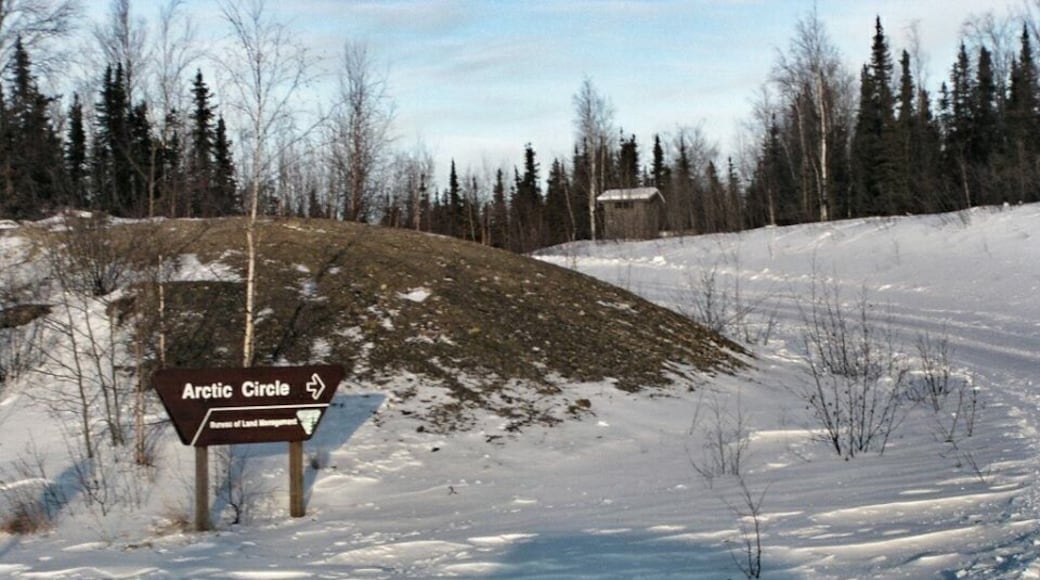
The Arctic Circle is one of the five major circles of latitude that mark maps of the Earth. As of 16 February 2015, it runs 66°33′45.6″ north of the Equator. The region north of this circle is known as the Arctic, and the zone just to the south is called the Northern Temperate Zone. The equivalent polar circle in the Southern Hemisphere is called the Antarctic Circle. The Arctic Circle is the southernmost latitude in the Northern Hemisphere at which the sun can remain continuously above or below the horizon for 24 hours (at the June solstice and December solstice respectively). North of the Arctic Circle, the sun is above the horizon for 24 continuous hours at least once per year (and therefore visible at midnight) and below the horizon for 24 continuous hours at least once per year (and therefore not visible at noon). On the Arctic Circle those events occur, in principle, exactly once per year, at the June and December solstices, respectively. However, in practice, because of atmospheric refraction and mirages, and because the sun appears as a disk and not a point, part of the midnight sun may be seen on the night of the northern summer solstice up to about 50′ (90 km (56 mi)) south of the Arctic Circle; similarly, on the day of the northern winter solstice, part of the sun may be seen up to about 50′ north of the Arctic Circle. That is true at sea level; those limits increase with elevation above sea level, although in mountainous regions there is often no direct view of the true horizon. The position of the Arctic Circle is not fixed. It directly depends on the Earth's axial tilt, which fluctuates within a margin of 2° over a 40,000-year period,[2] notably due to tidal forces resulting from the orbit of the Moon. The Arctic Circle is currently drifting northwards at a speed of about 15 m (49 ft) per year; see Circle of latitude for more information. #snow
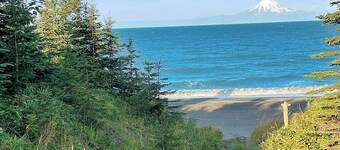
Nikiski, Alaska.
3
查看全部 3 張相片
入住
結束日期
旅客
搜尋
探索地圖
暢遊尼基斯基