跳至主目錄
搜尋行程
搜尋行程
搜尋行程
酒店/住宿
酒店/住宿
機票
機票
租車
租車
套票行程
套票行程
當地玩樂
當地玩樂
優惠
團體和會議
最後召集優惠
打開 App
HKD
刊登住宿
一般支援
行程
Communication Center
登入
會員價即訂即慳
登入
意見
北美洲
喬治城發電廠博物館
西雅圖
華盛頓
美國
北美洲
計劃行程
喬治城發電廠博物館附近的酒店
喬治城發電廠博物館租車
南西雅圖度假行程
喬治城發電廠博物館, 西雅 圖, 華盛頓, 美國必遊景點
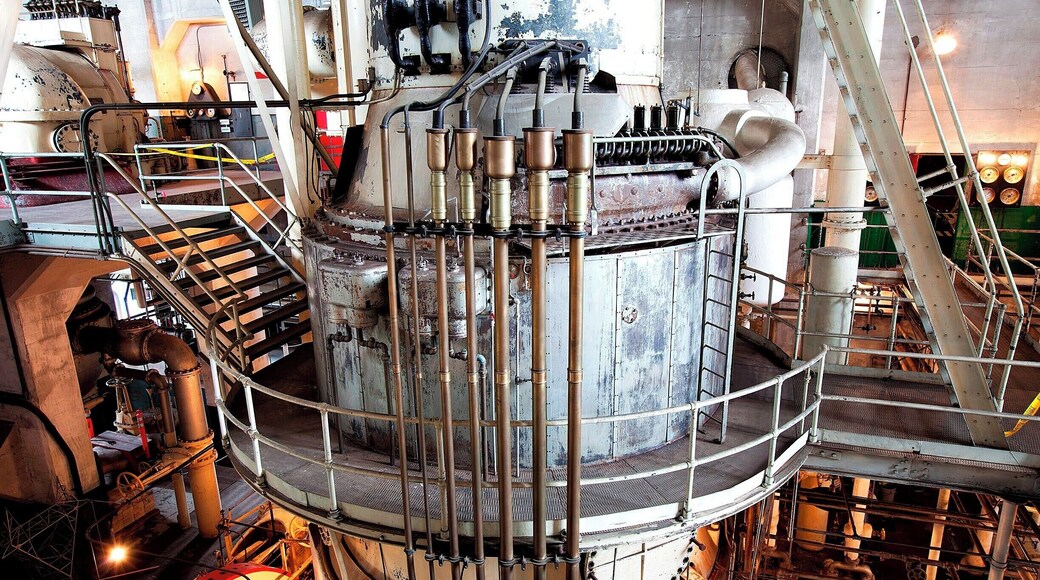
The boiler room at the Steam Plant offers an eerie glimpse into early 20th-century working conditions. Oil (and later coal) was fed into 16 giant boilers to produce the steam required to turn the Curtis Steam Turbines in the room next door. The Georgetown Steam Plant was built in 1906 to provide power for Seattle's streetcars, the city of Georgetown, and the Seattle-Tacoma Railway. Although the turbines were state-of-the art for their time, the technology was advancing so quickly that the plant became outdated within 10 years. It was soon relegated to secondary status and was used occasionally through the 1970s during droughts and to meet peak power demand. Today, the nearly-complete plant is operated as a free museum and is open to the public the second Saturday of every month from 10am-2pm.
These control panels monitored the Curtis Steam Turbines installed in 1906 and 1907. Although the turbines were state-of-the art for their time, the technology was advancing so quickly that the plant became outdated within a decade. It was soon relegated to secondary status and was used occasionally through the 1970s during droughts and to meet peak power demand. Today, the nearly-complete plant is operated as a free museum and is open to the public the second Saturday of every month from 10am-2pm.
This 1907 Curtis Steam Turbine is one of only a handful still remaining from the early days of electrical power generation. Turbine design was at the forefront of technology in the early 1900s, and this particular turbine is a wonderful example, as it generated nearly 3 times the power of an adjacent turbine installed just one year earlier. Later, in 1917, a much smaller third turbine was added, which itself generated nearly as much power as the first two turbines combined. Such is the relentless pace of technology, and why so few of these historical turbines remain. The Georgetown Steam Plant was built in 1906 to provide power for Seattle's streetcars, the city of Georgetown, and the Seattle-Tacoma Railway. Although the turbines were state-of-the art for their time, the technology was advancing so quickly that the plant became outdated within 10 years. It was soon relegated to secondary status and was used occasionally through the 1970s during droughts and to meet peak power demand. Today, the nearly-complete plant is operated as a free museum and is open to the public the second Saturday of every month from 10am-2pm.
Seattle Electric Company branding can still be found on some of the large boilers at this 1906 power plant. The boilers produced enough steam to turn three Curtis Steam Turbines located in the adjacent room, generating up to 21K kilowatts. The Georgetown Steam Plant was built in 1906 to provide power for Seattle's streetcars, the city of Georgetown, and the Seattle-Tacoma Railway. Although the turbines were state-of-the art for their time, the technology was advancing so quickly that the plant became outdated within 10 years. It was soon relegated to secondary status and was used occasionally through the 1970s during droughts and to meet peak power demand. Today, the nearly-complete plant is operated as a free museum and is open to the public the second Saturday of every month from 10am-2pm.
6
查看全部 6 張相片
套票行程
酒店/住宿
機票
租車
當地玩樂
出發地
轉換出發地和目的地
目的地
日期
旅客