整间度假短租
BiancoAmore OSTUNI - the sky, the sea, the love -
BiancoAmore OSTUNI - the sky, the sea, the love -的照片库


点评
1010/10
绝佳
整租房屋
热门服务设施
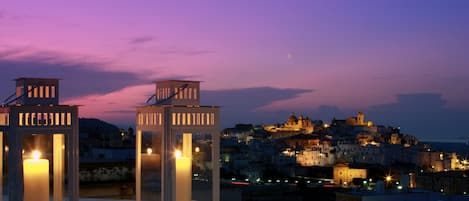
- 海景
- 厨房
- 洗衣机
- 烘干机
- 免费 Wi-Fi
- 空调
添加日期以查看价格
住宿简介
尽享整间住宿
您与同行的旅伴将享有整间度假短租,无需与陌生人共享。
BiancoAmore OSTUNI - the sky, the sea, the love -
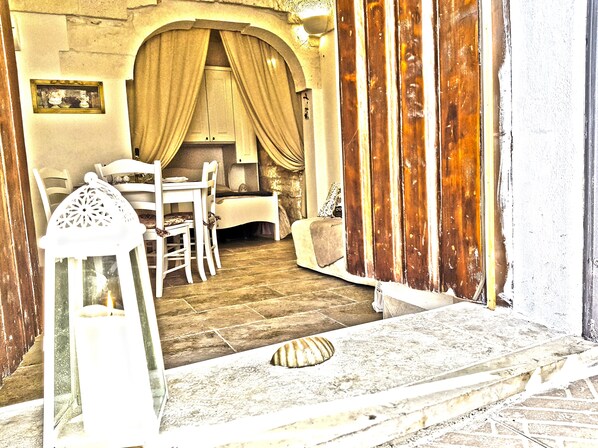
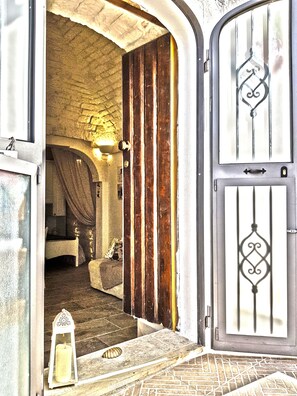
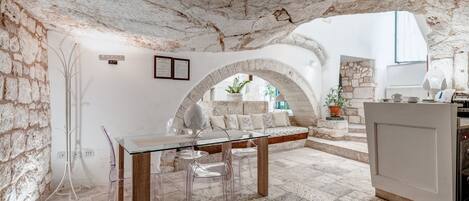
The attention to detail, the choice of fabrics, the restoration of the furniture and furnishings, have brought this two-room apartment of 50 square meters back to the ancient splendor in the center of OSTUNI.
Wealth, beauty, solidity, three attributes that best define a material that has made, and continues to do, the history of a place, the white stone of Ostuni painted with white lime.
This is the main component of the BIANCOAMORE OSTUNI Holiday Home.
Upon entering you will realize the surreal, intense, sometimes violent light that invests you in every corner of the house is for the most part due to this type of stone.
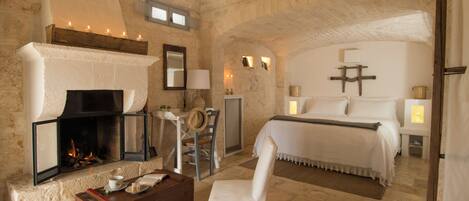
Another feature are the 3 vaults of the carriage and the alcove.
The vaulted ceiling or carriage roof serves to cover rooms with a rectangular plan. It consists of a central rectangular flat part surrounded by four barrel vaults set on the central part of the four sides of the perimeter and by four pavilion vaults set at the four corners of the base rectangle.
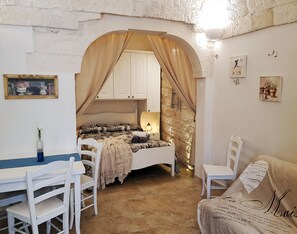
The alcove, on the other hand, is that part of the room with the Vintage white wooden double bridge bed.
The alcove is separated by an arch and closed by an elegant linen curtain.
In southern Italy and in the provinces of Lecce in Brindisi, vaulted roofing was often used due to the shortage of timber, a material widely used in other regions, in historical construction, both for flat roofs and for roofs. The abundance of limestone, present in many workable varieties, has therefore contributed substantially to the spread of this building structure. In Salento the boom of star vaults, barrel vaults and carriage vaulted vaults can be placed between 1600 and 1700. Previously, the roofs of noble houses were made in tiles or through reeds. Then an earthquake in 1743 destroyed much of the roofing, and so later vaulted rooms were built, much more resistant.
Still today you can admire the artisans at work in their workshops scattered throughout the Salento area, where the processing of stone and carparo is a sap of moderate importance for the local economy.
Colorful shades of white light up the walls and surfaces of furniture and furnishing accessories, giving here and there a play of joyful shades.
With us the past is a welcome guest!
The motivation of the white of Ostuni? A reason continues to exist despite the passage of centuries. Around 1800, the municipality of Ostuni issued an ordinance which obliges all inhabitants to paint the houses of the historic center in white. It is not an obligation dictated by vanity or to arouse the amazement of tourists in seeing this particularity, but it is a simple hygienic purpose. In the same year of the ordinance, Ostuni was hit by a long period of drought which caused epidemics and famines. It was the inhabitants themselves who had the idea of painting their houses with lime to avoid contagion of any type of infection and disease.
This belief, among other things founded, means that lime is still thrown today. Large stones closed in bags are placed in the wells of the city to purify the rainwater collected. In short, the ancient inhabitants of Ostuni had seen us long. The particularity of the white houses of the historic center is not only enchanting to admire, but also promotes the health of the city and consequently the multitude of tourists who come from all over the world.
Each visitor has a different conception: the writer Tonino Guerra in 2010 defined Ostuni as a fall of milk on the breast of the Apennines. And yet the journalist Ettore Della Giovanna in August 1941, passing through Ostuni, was enchanted by the vision of this natural spectacle defining it as the white city until absurd. An expanse of lime, chalk powder and milk.
Milk, white like mozzarella, like cheese and like Ostuni burrata which add to the list of things to try if you decide to visit this enchanted city.
The streets always crowded with people ready to appear typical products and souvenirs to give to friends and relatives once at home, every symbol of the city, every single souvenir can only bring back the typical milk white houses resting gently on the sky background.
Antique furniture and expertly restored recycled objects furnish the Holiday Home BIANCOAMORE OSTUNI making it unique, intimate and welcoming.
COMFORTS: Digital TV, Free WiFi, 2 Air Conditioners / Dehumidifiers, Pellet Stove, Professional Hair Dryer, Bed Linen, Towels, Refrigerator, Ovens, Capsule Coffee Maker, Electric Broom and Induction Electric Plate.
HOW TO REACH THE BIANCOAMORE OSTUNI HOLIDAY HOME:
Reach Ostuni by train
From Rome, Milan and many other places you can take a fast train to Ostuni and Brindisi. There are frequent trains during the day and it usually doesn't take long to get here. (Please note that some Eurostar trains have an additional cost).
Ostuni railway station is located outside the town, about 2 km from the WHITE CITY.
To reach the city of Ostuni just follow the simple directions or take the free local bus - shuttle just outside the station.
Reach Ostuni by plane
The closest airports to Ostuni are the airports of Brindisi at 30km and Bari at 98 km connected to the main Italian cities (Milan, Rome, Venice and Bologna) and abroad. Both are easily reached in a few minutes by following the SS16. Information: Tel. (+39) 080 5800200 - www. aeroportidipuglia. en.
Reach Ostuni by car
• From Bari: Arriving along the A16 or A14, take the Bari Nord exit towards Brindisi. Follow the highway 16 from Bari to Brindisi until the Ostuni-Villanova exit, in the direction of Ostuni. Continue following the indications.
• From Taranto: Arriving along the highway 106 take the Grottaglie-Brindisi exit. Follow the state road 7 Taranto-Brindisi to the Ostuni exit.
• From Lecce: Coming from Brindisi or Lecce follow the highway 16 to the Ostuni-Villanova exit, towards Ostuni. Continue following the signs for the city.
BIANCOAMORE OSTUNI is located in the HISTORICAL CENTER OF THE FAMOUS WHITE CITY, a 3-minute walk from Piazza della Libertà, a 20-minute walk from the bus station and a few minutes by free shuttle from the OSTUNI RAILWAY STATION.
FOR INFO AND RESERVATIONS:
BIANCOAMORE OSTUNI
Via Gaetano Sansone Senior, 39 - 72017 OSTUNI (BR)
Mr Giuseppe Cusano Cell. +39 339 726 9889
Mail: info @ biancoamoreostuni. com
Web: www. biancoamoreostuni. com
Wealth, beauty, solidity, three attributes that best define a material that has made, and continues to do, the history of a place, the white stone of Ostuni painted with white lime.
This is the main component of the BIANCOAMORE OSTUNI Holiday Home.
Upon entering you will realize the surreal, intense, sometimes violent light that invests you in every corner of the house is for the most part due to this type of stone.
Another feature are the 3 vaults of the carriage and the alcove.
The vaulted ceiling or carriage roof serves to cover rooms with a rectangular plan. It consists of a central rectangular flat part surrounded by four barrel vaults set on the central part of the four sides of the perimeter and by four pavilion vaults set at the four corners of the base rectangle.
The alcove, on the other hand, is that part of the room with the Vintage white wooden double bridge bed.
The alcove is separated by an arch and closed by an elegant linen curtain.
In southern Italy and in the provinces of Lecce in Brindisi, vaulted roofing was often used due to the shortage of timber, a material widely used in other regions, in historical construction, both for flat roofs and for roofs. The abundance of limestone, present in many workable varieties, has therefore contributed substantially to the spread of this building structure. In Salento the boom of star vaults, barrel vaults and carriage vaulted vaults can be placed between 1600 and 1700. Previously, the roofs of noble houses were made in tiles or through reeds. Then an earthquake in 1743 destroyed much of the roofing, and so later vaulted rooms were built, much more resistant.
Still today you can admire the artisans at work in their workshops scattered throughout the Salento area, where the processing of stone and carparo is a sap of moderate importance for the local economy.
Colorful shades of white light up the walls and surfaces of furniture and furnishing accessories, giving here and there a play of joyful shades.
With us the past is a welcome guest!
The motivation of the white of Ostuni? A reason continues to exist despite the passage of centuries. Around 1800, the municipality of Ostuni issued an ordinance which obliges all inhabitants to paint the houses of the historic center in white. It is not an obligation dictated by vanity or to arouse the amazement of tourists in seeing this particularity, but it is a simple hygienic purpose. In the same year of the ordinance, Ostuni was hit by a long period of drought which caused epidemics and famines. It was the inhabitants themselves who had the idea of painting their houses with lime to avoid contagion of any type of infection and disease.
This belief, among other things founded, means that lime is still thrown today. Large stones closed in bags are placed in the wells of the city to purify the rainwater collected. In short, the ancient inhabitants of Ostuni had seen us long. The particularity of the white houses of the historic center is not only enchanting to admire, but also promotes the health of the city and consequently the multitude of tourists who come from all over the world.
Each visitor has a different conception: the writer Tonino Guerra in 2010 defined Ostuni as a fall of milk on the breast of the Apennines. And yet the journalist Ettore Della Giovanna in August 1941, passing through Ostuni, was enchanted by the vision of this natural spectacle defining it as the white city until absurd. An expanse of lime, chalk powder and milk.
Milk, white like mozzarella, like cheese and like Ostuni burrata which add to the list of things to try if you decide to visit this enchanted city.
The streets always crowded with people ready to appear typical products and souvenirs to give to friends and relatives once at home, every symbol of the city, every single souvenir can only bring back the typical milk white houses resting gently on the sky background.
Antique furniture and expertly restored recycled objects furnish the Holiday Home BIANCOAMORE OSTUNI making it unique, intimate and welcoming.
COMFORTS: Digital TV, Free WiFi, 2 Air Conditioners / Dehumidifiers, Pellet Stove, Professional Hair Dryer, Bed Linen, Towels, Refrigerator, Ovens, Capsule Coffee Maker, Electric Broom and Induction Electric Plate.
HOW TO REACH THE BIANCOAMORE OSTUNI HOLIDAY HOME:
Reach Ostuni by train
From Rome, Milan and many other places you can take a fast train to Ostuni and Brindisi. There are frequent trains during the day and it usually doesn't take long to get here. (Please note that some Eurostar trains have an additional cost).
Ostuni railway station is located outside the town, about 2 km from the WHITE CITY.
To reach the city of Ostuni just follow the simple directions or take the free local bus - shuttle just outside the station.
Reach Ostuni by plane
The closest airports to Ostuni are the airports of Brindisi at 30km and Bari at 98 km connected to the main Italian cities (Milan, Rome, Venice and Bologna) and abroad. Both are easily reached in a few minutes by following the SS16. Information: Tel. (+39) 080 5800200 - www. aeroportidipuglia. en.
Reach Ostuni by car
• From Bari: Arriving along the A16 or A14, take the Bari Nord exit towards Brindisi. Follow the highway 16 from Bari to Brindisi until the Ostuni-Villanova exit, in the direction of Ostuni. Continue following the indications.
• From Taranto: Arriving along the highway 106 take the Grottaglie-Brindisi exit. Follow the state road 7 Taranto-Brindisi to the Ostuni exit.
• From Lecce: Coming from Brindisi or Lecce follow the highway 16 to the Ostuni-Villanova exit, towards Ostuni. Continue following the signs for the city.
BIANCOAMORE OSTUNI is located in the HISTORICAL CENTER OF THE FAMOUS WHITE CITY, a 3-minute walk from Piazza della Libertà, a 20-minute walk from the bus station and a few minutes by free shuttle from the OSTUNI RAILWAY STATION.
FOR INFO AND RESERVATIONS:
BIANCOAMORE OSTUNI
Via Gaetano Sansone Senior, 39 - 72017 OSTUNI (BR)
Mr Giuseppe Cusano Cell. +39 339 726 9889
Mail: info @ biancoamoreostuni. com
Web: www. biancoamoreostuni. com
住宿服务设施
沙滩
- 地处沙滩
滑雪
- 优先滑雪(可选)
互联网
- 独立别墅提供:免费 Wi-Fi
停车设施和交通
- 无需乘车
- 店内停车设施设有车库
厨房
- 冰箱
- 厨房岛台
- 炊具、餐具和厨具
- 电热水壶
- 调味料
- 咖啡壶/茶具
- 烤箱
- 龙虾/螃蟹笼
- 炉灶台
- 清洁用品
- 微波炉
- 小厨房
用餐
- 餐桌
卧室
- 1 间卧室
- 沙发床
- 提供床单
浴室
- 1 间浴室
- 吹风机
- 肥皂
- 淋浴
- 提供毛巾
- 卫生纸
- 洗发水
- 坐浴盆
起居区
- 餐桌
- 柴炉
- 独立用餐区
- 客厅
娱乐
- 可收看数字频道的智能电视
- 书
室外区域
- 火坑
- 烧烤架
洗衣房
- 洗衣机
- 洗衣设施
舒适
- 空调
- 暖气
宠物
- 不允许携带宠物
适用性/无障碍设施
- 无烟住宿
服务和便利设施
- 按要求更换床单
- 按要求更换毛巾
- 按要求提供客房清洁服务
- 熨斗/熨衣板
地段亮点
- 地处村庄
- 地处市中心
- 近海
- 邻近奥特莱斯商场
- 邻近动物园
- 邻近海湾
- 邻近医院
- 邻近游船码头
- 毗邻健康/美容 SPA 中心
休闲活动
- 高尔夫特权(可选)
- 优先滑雪(可选)
- 附近可步行游览野生动物园
- 附近可参加生态旅游
- 附近可打高尔夫
- 附近可钓鱼
- 附近可浮潜
- 附近可滑水
- 附近可划皮艇
- 附近可进行冲浪/趴板冲浪
- 附近可进行洞穴探险
- 附近可进行山地骑行
- 附近可进行水肺潜水
- 附近可攀岩
- 附近可骑马
- 附近可骑摩托艇
- 附近可骑水上摩托车
- 附近可狩猎
- 附近可玩充气船滑水
- 附近可玩帆板运动
- 附近可玩帆船
- 附近可玩漂流
- 附近可游览酒庄
- 附近可游泳
- 邻近篮球场
- 邻近远足小径/自行车道
- 邻近主题公园
安全功能
- 未报告一氧化碳检测器(房东未注明住宿是否有一氧化碳检测器;考虑携带便携式检测器)
- 未报告烟雾检测器(房东未注明住宿是否有烟雾检测器)
- 呆锁
概况
- 床单更换(按要求提供)
- 单元面积:65 平方米
- 客房节能开关
- 客房清洁(按要求提供)
- 毛巾(应要求更换)。
- 住宿不接待儿童入住
- LED 照明至少占 80%
同类型住宿

蒙蒂莎拉戈酒店
蒙蒂莎拉戈酒店
Ostuni
- 含早餐
- SPA
- 可带宠物
- 含停车设施
9.2 分,总分 10,好极了,270 条点评
9.2
好极了
270 条点评
新价格 HK$757
HK$757
总价 HK$889
包含税费
3 月 4 日 - 3 月 5 日

奥斯图尼宫酒店小酒馆及 SPA
奥斯图尼宫酒店小酒馆及 SPA
Ostuni
- 含早餐
- SPA
- 可带宠物
- 含停车设施
9.2 分,总分 10,好极了,148 条点评
9.2
好极了
148 条点评
新价格 HK$1,024
HK$1,024
总价 HK$1,182