搜尋德哥利祖當地玩樂 | 德哥利祖必玩熱門旅遊景點與一日遊行程及門票

活動、景點及導賞團

Batik (Javanese pronunciation: [ˈbateʔ]; Indonesian: [ˈbatɪk]) is a technique of wax-resist dyeing applied to whole cloth, or cloth made using this technique. Batik is made either by drawing dots and lines of the resist with a spouted tool called a canting (IPA: [ʈ͡ʂantiŋ], also spelled tjanting), or by printing the resist with a copper stamp called a cap (IPA: [ʈ͡ʂap], also spelled tjap). The applied wax resists dyes and therefore allows the artisan to color selectively by soaking the cloth in one color, removing the wax with boiling water, and repeating if multiple colors are desired.

A tradition of making batik is found in various countries, including Nigeria, China, India, Malaysia, Philippines and Sri Lanka; the batik of Indonesia, however, is the most well-known. Indonesian batik made in the island of Java has a long history of acculturation, with diverse patterns influenced by a variety of cultures, and is the most developed in terms of pattern, technique, and the quality of workmanship. On October 2009, UNESCO designated Indonesian batik as a Masterpiece of Oral and Intangible Heritage of Humanity.

Source: Wikipedia 

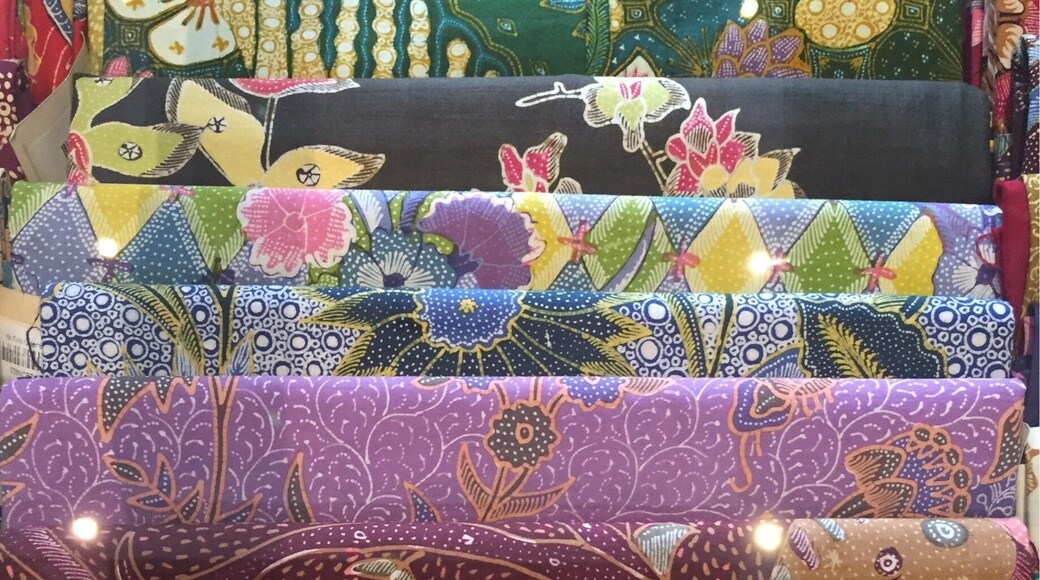
These batik clothes are sold at one of the high end hotel's gift shop in Yogyakarta. They are hand drawn and painted and hence command a high price! It ranges over US$200 although some cheap batik at the market can be found for a mere US$2. The difference lies in the quality, the design and also the amount of skill that's needed to make them. 

Common batik wear are made from cotton. The ones shown here are silk and limited in quantity produced.

Yogyakarta and Surakata (Solo) are two cities where batik originated in Indonesia.

#unesco
Batik (Javanese pronunciation: [ˈbateʔ]; Indonesian: [ˈbatɪk]) is a technique of wax-resist dyeing applied to whole cloth, or cloth made using this technique. Batik is made either by drawing dots and lines of the resist with a spouted tool called a canting (IPA: [ʈ͡ʂantiŋ], also spelled tjanting), or by printing the resist with a copper stamp called a cap (IPA: [ʈ͡ʂap], also spelled tjap). The applied wax resists dyes and therefore allows the artisan to color selectively by soaking the cloth in one color, removing the wax with boiling water, and repeating if multiple colors are desired.

A tradition of making batik is found in various countries, including Nigeria, China, India, Malaysia, Philippines and Sri Lanka; the batik of Indonesia, however, is the most well-known. Indonesian batik made in the island of Java has a long history of acculturation, with diverse patterns influenced by a variety of cultures, and is the most developed in terms of pattern, technique, and the quality of workmanship. On October 2009, UNESCO designated Indonesian batik as a Masterpiece of Oral and Intangible Heritage of Humanity.

Source: Wikipedia 

These batik clothes are sold at one of the high end hotel's gift shop in Yogyakarta. They are hand drawn and painted and hence command a high price! It ranges over US$200 although some cheap batik at the market can be found for a mere US$2. The difference lies in the quality, the design and also the amount of skill that's needed to make them. 

Common batik wear are made from cotton. The ones shown here are silk and limited in quantity produced.

Yogyakarta and Surakata (Solo) are two cities where batik originated in Indonesia.

#unesco

  • find price illustration

    探索活動

    由活動和景點以至一日遊和接駁服務,幾千種體驗等你探索。
  • calendar shield illustration

    輕鬆預訂

    不用排隊,只需幾分鐘即可在網上預訂熱門景點門票,很多活動還可以免費取消。
  • trophy illustration

    奬勵自己

    會員預訂活動可慳至少 %。

人氣活動

導賞團與一日遊

查看所有 75 個活動

私人與自訂旅行團

查看所有 31 個活動

歷險與戶外活動

查看所有 16 個活動

飲食與夜生活

查看所有 9 個活動

表演與音樂會

查看所有 8 個活動

熱門景點

德哥利祖附近城市