

































Number of reviews | 159 |
|---|---|
Accommodation | 285 hotels |
Lowest Price | HK$29 |
Highest Price | HK$563 |
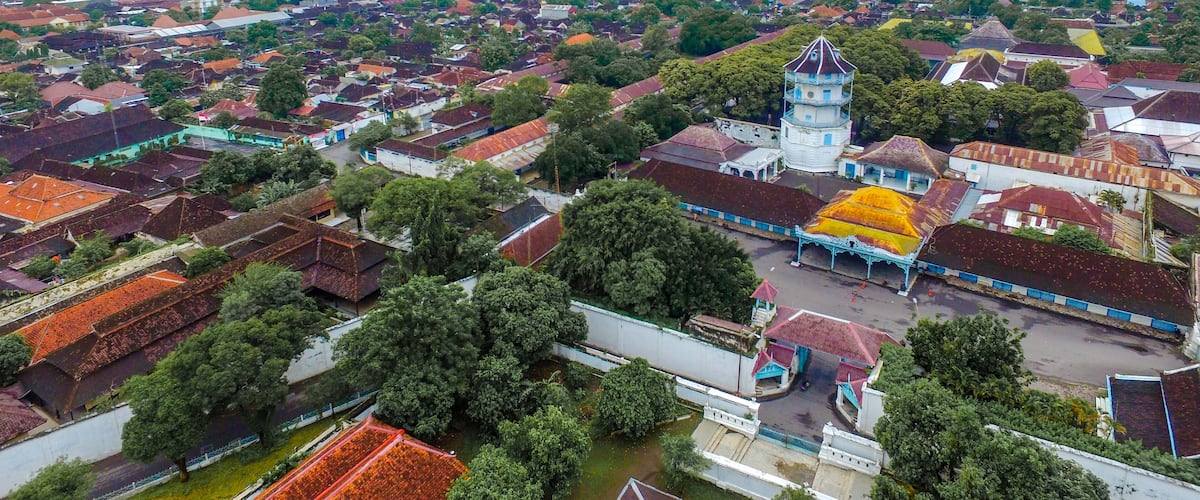
Adisumarmo Intl. (SOC) Nearby Hotels from HK$29
 Change your mindBook hotels with free cancellation
 Be pickySearch almost a million properties worldwide
Check prices for these dates
Tonight
Tomorrow
This weekend
Next weekend
Our top choices for Surakarta (SOC-Adisumarmo Intl.) hotels

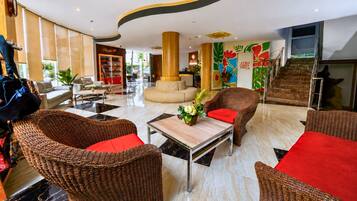
1. Ayra Hotel Airport Solo
Ayra Hotel Airport Solo0.9 km from Surakarta (SOC-Adisumarmo Intl.)
The price is HK$97
HK$118 total
includes taxes & fees
24 Sept - 25 Sept

2. OYO 94931 Mardi Homestay Syariah
OYO 94931 Mardi Homestay Syariah0.6 km from Surakarta (SOC-Adisumarmo Intl.)
The price is HK$24
HK$29 total
includes taxes & fees
20 Sept - 21 Sept
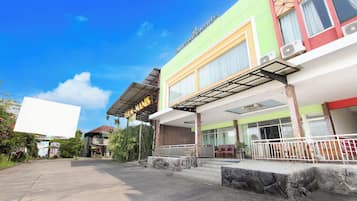
3. Hotel O Jalan Slamet Riyadi Near Bandara Adi Soemarmo Formerly Amanah Sejahtera
Hotel O Jalan Slamet Riyadi Near Bandara Adi Soemarmo Formerly Amanah Sejahtera0.8 km from Surakarta (SOC-Adisumarmo Intl.)
The price is HK$39
HK$43 total
includes taxes & fees
24 Sept - 25 Sept

4. Alila Solo, Java
Alila Solo, Java6.5 km from Surakarta (SOC-Adisumarmo Intl.)
9.2 out of 10, Wonderful, (152 reviews)
"The best staff i have seen in many years"

Donald
The price is HK$465
HK$563 total
includes taxes & fees
20 Sept - 21 Sept
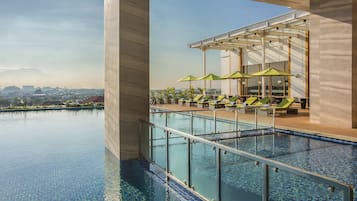
5. Swiss-Belhotel Solo
Swiss-Belhotel Solo9.2 km from Surakarta (SOC-Adisumarmo Intl.)
9.2 out of 10, Wonderful, (43 reviews)
"The hotel was very nice and the staff was very courteous and helpful. We truly enjoyed our stay and look forward to returning in the future."
STAN
The price is HK$348
HK$421 total
includes taxes & fees
20 Sept - 21 Sept

6. Zigna Kampung Batik
Zigna Kampung Batik8.1 km from Surakarta (SOC-Adisumarmo Intl.)
10.0 out of 10, Exceptional, (4 reviews)
"Good"

Ari Wijaya
The price is HK$231
HK$279 total
includes taxes & fees
18 Sept - 19 Sept

7. Lorin Syariah Solo Hotel
Lorin Syariah Solo Hotel4 km from Surakarta (SOC-Adisumarmo Intl.)
8.2 out of 10, Very good, (14 reviews)
"Unfortunately the ac seems not cold enough"
Reza
The price is HK$139
HK$168 total
includes taxes & fees
18 Sept - 19 Sept
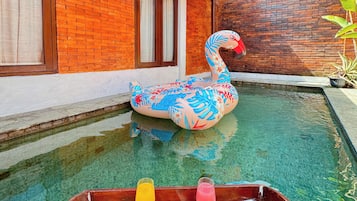
8. Chrome Hotel & Resort Solo
Chrome Hotel & Resort Solo3.6 km from Surakarta (SOC-Adisumarmo Intl.)
8.4 out of 10, Very good, (8 reviews)
"the property is very quiet and very private. it was perfect for just relaxing and much needed break"
Anonymous traveller
The price is HK$293
HK$354 total
includes taxes & fees
23 Sept - 24 Sept

9. HARRIS Hotel & Conventions Solo
HARRIS Hotel & Conventions Solo7.8 km from Surakarta (SOC-Adisumarmo Intl.)
10.0 out of 10, Exceptional, (4 reviews)
"Helpful staff; comfortable rooms"

Martin
The price is HK$236
HK$286 total
includes taxes & fees
20 Sept - 21 Sept

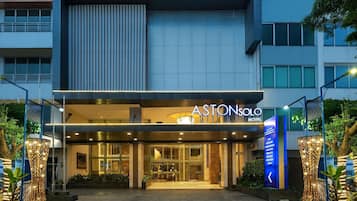
10. Aston Solo
Aston Solo7.9 km from Surakarta (SOC-Adisumarmo Intl.)
8.6 out of 10, Excellent, (97 reviews)
"Just one night, but the location, breakfast and service is excellent."

Adam
The price is HK$361
HK$401 total
includes taxes & fees
24 Sept - 25 Sept

11. Mahalaya The Legacy Solo
Mahalaya The Legacy Solo9.9 km from Surakarta (SOC-Adisumarmo Intl.)
9.0 out of 10, Wonderful, (7 reviews)
"It was a perfect and enjoyable weekend get away break. The hotel is charming and comfortable. "
Anonymous traveller
The price is HK$233
HK$282 total
includes taxes & fees
20 Sept - 21 Sept
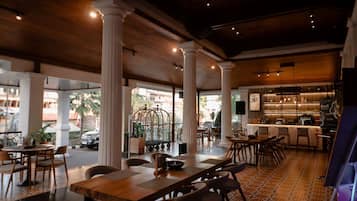
12. FIM by Zigna
FIM by Zigna9.7 km from Surakarta (SOC-Adisumarmo Intl.)
9.4 out of 10, Exceptional, (6 reviews)
"The hotel is an excellent place to stay. The hotel itself is not special or fancy, but it is well-run, clean, and located in the center of Solo. The breakfast buffet is excellent, the restaurant is good, and the hotel also has a nice cafe with an outside seating area. They featured life music at the cafe on weekend evenings. We saw no other foreign guests, which we saw as a plus. Many staff members speak good English."
Erzo
The price is HK$204
HK$247 total
includes taxes & fees
21 Sept - 22 Sept

14. ibis Styles Solo
ibis Styles Solo9.6 km from Surakarta (SOC-Adisumarmo Intl.)
8.2 out of 10, Very good, (109 reviews)
"Room nice and clean, staff was great and nice, breakfast was good and delicious and has pool is a plus."
Endro
The price is HK$173
HK$209 total
includes taxes & fees
4 Oct - 5 Oct

15. Nata Azana Hotel Solo
Nata Azana Hotel Solo10.7 km from Surakarta (SOC-Adisumarmo Intl.)
9.6 out of 10, Exceptional, (7 reviews)
"Nice "
Pramastuti
The price is HK$208
HK$252 total
includes taxes & fees
18 Oct - 19 Oct
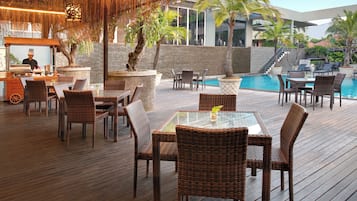
16. Novotel Solo
Novotel Solo9.6 km from Surakarta (SOC-Adisumarmo Intl.)
8.2 out of 10, Very good, (122 reviews)
"I like to staying in this place very nice people."
Supartiningsih
The price is HK$249
HK$301 total
includes taxes & fees
4 Oct - 5 Oct
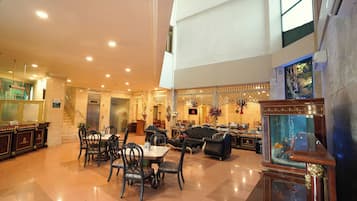
17. Hotel Indah Palace Solo
Hotel Indah Palace Solo9.8 km from Surakarta (SOC-Adisumarmo Intl.)
9.0 out of 10, Wonderful, (4 reviews)
"Great place to stay in surakarta."
Sam
The price is HK$148
HK$179 total
includes taxes & fees
20 Sept - 21 Sept
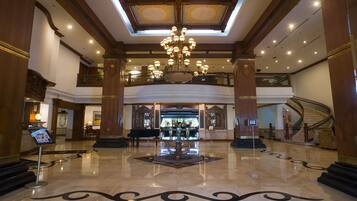
18. The Sunan Hotel Solo
The Sunan Hotel Solo7 km from Surakarta (SOC-Adisumarmo Intl.)
7.4 out of 10, Good, (6 reviews)
"Comfortable room "

Kwok Man Billie
The price is HK$220
HK$267 total
includes taxes & fees
6 Oct - 7 Oct

19. favehotel Manahan - Solo
favehotel Manahan - Solo6.7 km from Surakarta (SOC-Adisumarmo Intl.)
7.2 out of 10, Good, (45 reviews)
"had feel some language barrier. "
Freedom
The price is HK$190
HK$211 total
includes taxes & fees
30 Sept - 1 Oct

20. Lampion Hotel Solo
Lampion Hotel Solo8.2 km from Surakarta (SOC-Adisumarmo Intl.)
7.4 out of 10, Good, (6 reviews)
"proses cek in agak lama, karena sesuatu hal. Selebihnya cukup baik"

E Suzana
The price is HK$138
HK$167 total
includes taxes & fees
24 Sept - 25 Sept
Lowest nightly price found within the past 24 hours based on a 1 night stay for 2 adults. Prices and availability subject to change. Additional terms may apply.
Top Adisumarmo Intl. Hotel Reviews
Hotels with Free Airport Shuttle in Ngemplak

The Gambir Anom Hotel Resort & Convention
Jl. Embakasi Haji No. 24, Solo Ngemplak Central Java