邦賈沙里
梭羅
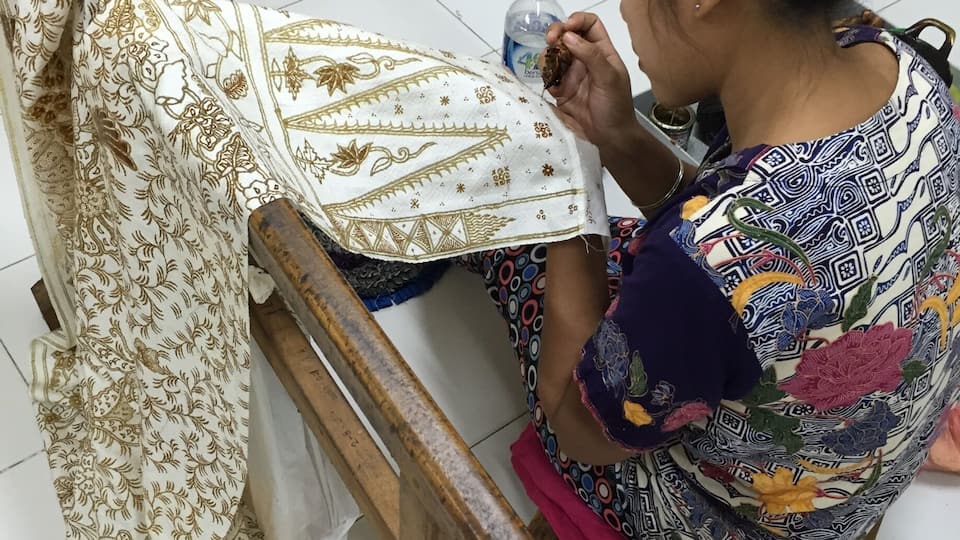
![At the museum no photos are allowed which is really unfortunate as it was well worth the visit and the guided tour is definitely not to be missed. In the museum there are even Batik made from the Dutch era which depicts stories like Little Red Riding Hood and Snow White!
I enjoyed the tour v much and at the end of the tour we were brought to this room where the artisan were working on hand drawn batik.
Below is an excerpt from Wikipedia for anyone interested in learning more about the process of batik making.
Firstly, a cloth is washed, soaked and beaten with a large mallet. Patterns are drawn with pencil and later redrawn using hot wax, usually made from a mixture of paraffin or bees wax, sometimes mixed with plant resins, which functions as a dye-resist. The wax can be applied with a variety of tools. A pen-like instrument called a canting (IPA: [tʃantiŋ], sometimes spelled with old Dutch orthography tjanting) is the most common. A canting is made from a small copper reservoir with a spout on a wooden handle. The reservoir holds the resist which flows through the spout, creating dots and lines as it moves. For larger patterns, a stiff brush may be used. Alternatively, a copper block stamp called a cap (IPA: [tʃap]; old spelling tjap) is used to cover large areas more efficiently.
After the cloth is dry, the resist is removed by scraping or boiling the cloth. The areas treated with resist keep their original color; when the resist is removed the contrast between the dyed and undyed areas forms the pattern. This process is repeated as many times as the number of colors desired.
The most traditional type of batik, called batik tulis (written batik), is drawn using only the canting. The cloth need to be drawn on both sides and dipped in a dye bath three to four times. The whole process may take up to a year; it yields considerably finer patterns than stamped batik.
Source: Wikipedia](https://images.trvl-media.com/place/6224808/26fd1460-c65a-4c1a-9444-7a893e883ac9.jpg?impolicy=fcrop&w=1040&h=580&q=mediumHigh)
熱門景點
Mangkunegaran Palace 公爵領地
Mangkunegaran Palace 公爵領地只是梭羅其中一個景點 ,你又怎能錯過其他好玩的地方?想了解這個濃厚文化地區,體驗當地的博物館和音樂劇院就是其中一個最佳辦法。
當地玩樂
熱門邦賈沙里酒店及住宿

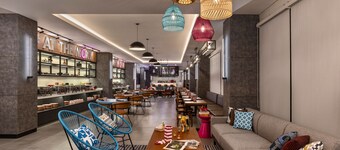
梭羅諾富特酒店
Jalan Slamet Riyadi 272 Surakarta Central Java
3月28日 至 3月29日 價格為每晚 HK$226
HK$226
合共 HK$273
3 月 28 日 - 3 月 29 日
連稅及其他費用
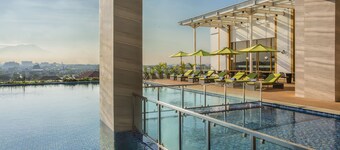
歡迎在梭羅入住此SPA酒店。這裡備有免費 Wi-Fi、免費泊車及2 個室外泳池任你盡享。丹納爾哈迪及拉迪亞普斯塔卡博物館等熱門景點就在附近。
8.2/10 Very Good! (114 則評價)
房間乾淨,服務也很到位,有提供飲用水,但是浴室有很多發霉的地方,抽風機會發出巨大的噪音,可能要更換比較好
評價日期:2025 年 9 月 4 日

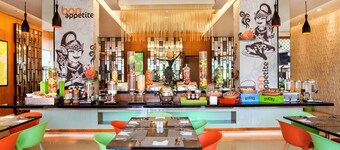
Solo Moxy 飯店
Jl. Slamet Riyadi No.173, Kemlayan Surakarta Central Java
4月2日 至 4月3日 價格為每晚 HK$253
HK$253
合共 HK$306
4 月 2 日 - 4 月 3 日
連稅及其他費用
歡迎在梭羅入住此酒店。這裡備有免費 Wi-Fi、免費泊車及早餐 (收費)任你盡享。Radya 博物館圖書館及Mangkunegaran Palace 公爵領地等熱門景點就在附近。

梭羅Wstay酒店
Jl. Monginsidi No.125 Surakarta Central Java
3月30日 至 3月31日 價格為每晚 HK$130
HK$130
合共 HK$157
3 月 30 日 - 3 月 31 日
連稅及其他費用
歡迎在梭羅入住此商務酒店。這裡備有免費泊車、早 餐 (收費)及24 小時客房送餐服務任你盡享。中村診所及克普拉邦公園等熱門景點就在附近。
6.8/10 (17 則評價)
Lekkage plafond en dat is al aangemeld maar was nog geen reactie van de personeel.
評價日期:2024 年 10 月 14 日

芭堤雅FIM酒店
31 Jl. Yosodipuro Surakarta Jawa Tengah
歡迎在梭羅入住此SPA酒店。這裡備有免費 Wi-Fi、免費泊車及全方位 SPA任你盡享。中村診所及Mangkunegaran Palace 公爵領地等熱門景點就在附近。
9.4/10 Exceptional! (6 則評價)
The hotel is an excellent place to stay. The hotel itself is not special or fancy, but it is well-run, clean, and located in the center of Solo. The breakfast buffet is excellent, the restaurant is good, and the hotel also has a nice cafe with an outside seating area. They featured life music at ...
評價日期:2025 年 7 月 19 日

梭羅瑞士貝爾酒店
Jalan Ahmad Yani 45 Surakarta Jawa Tengah
4月17日 至 4月18日 價格為每晚 HK$312
HK$312
合共 HK$383
4 月 17 日 - 4 月 18 日
連稅及其他費用
歡迎在梭羅入住此SPA酒店。這裡備有免費 Wi-Fi、免費泊車及全方位 SPA任你盡享。中村診所及克普拉邦公園等熱門景點就在附近。
9.2/10 Wonderful! (38 則評價)
Service attentionné. Hébergement impeccable. Idéal pour le travail. Vue incroyable sur la grande mosquée et les montagnes.
評價日期:2025 年 11 月 14 日

索洛宜必思尚品酒店
Jalan Gajah Mada 23 Surakarta Central Java
4月2日 至 4月3日 價格為每晚 HK$162
HK$162
合共 HK$196
4 月 2 日 - 4 月 3 日
連稅及其他費用
歡迎在梭羅入住此SPA酒店。這裡備有免費 Wi-Fi、免費泊車及2 個室外泳池任你盡享。拉迪亞普斯塔卡博物館及丹納爾哈迪等熱門景點就在附近。
8.2/10 Very Good! (103 則評價)
Room is not big but enough for accommodation. Swimming pool is great! All Staffs are very helpful. Location is great.
評價日期:2020 年 1 月 23 日
過去 24 小時內找到的最低每晚價格 (2 位成人 1 晚)。價格及供應情況可能會出現變動。可能設有其他條款。

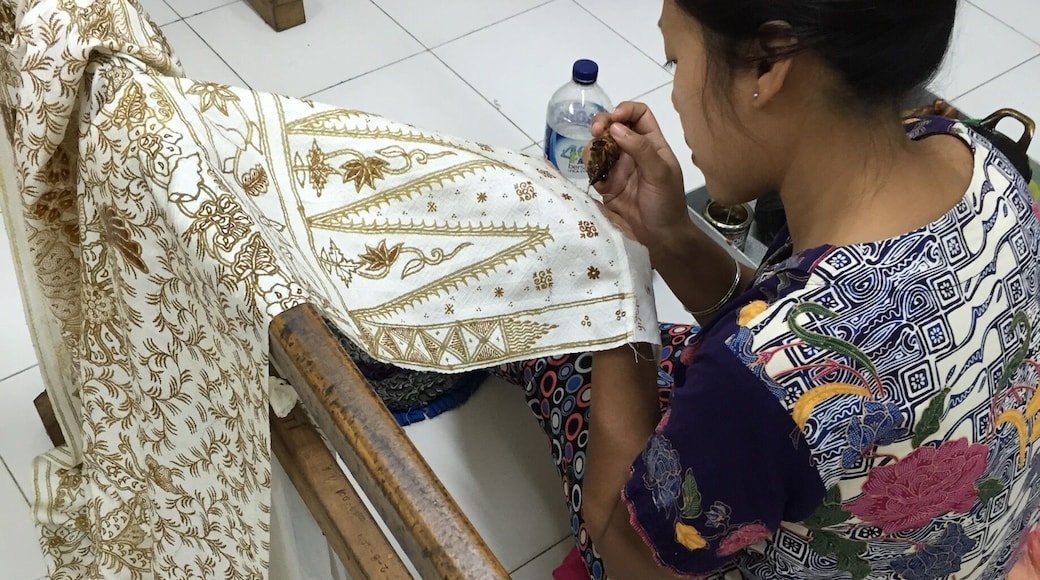
![At the museum no photos are allowed which is really unfortunate as it was well worth the visit and the guided tour is definitely not to be missed. In the museum there are even Batik made from the Dutch era which depicts stories like Little Red Riding Hood and Snow White!
I enjoyed the tour v much and at the end of the tour we were brought to this room where the artisan were working on hand drawn batik.
Below is an excerpt from Wikipedia for anyone interested in learning more about the process of batik making.
Firstly, a cloth is washed, soaked and beaten with a large mallet. Patterns are drawn with pencil and later redrawn using hot wax, usually made from a mixture of paraffin or bees wax, sometimes mixed with plant resins, which functions as a dye-resist. The wax can be applied with a variety of tools. A pen-like instrument called a canting (IPA: [tʃantiŋ], sometimes spelled with old Dutch orthography tjanting) is the most common. A canting is made from a small copper reservoir with a spout on a wooden handle. The reservoir holds the resist which flows through the spout, creating dots and lines as it moves. For larger patterns, a stiff brush may be used. Alternatively, a copper block stamp called a cap (IPA: [tʃap]; old spelling tjap) is used to cover large areas more efficiently.
After the cloth is dry, the resist is removed by scraping or boiling the cloth. The areas treated with resist keep their original color; when the resist is removed the contrast between the dyed and undyed areas forms the pattern. This process is repeated as many times as the number of colors desired.
The most traditional type of batik, called batik tulis](https://images.trvl-media.com/place/6224808/26fd1460-c65a-4c1a-9444-7a893e883ac9.jpg?impolicy=fcrop&w=350&h=192&q=medium)