梭羅
旅遊指南


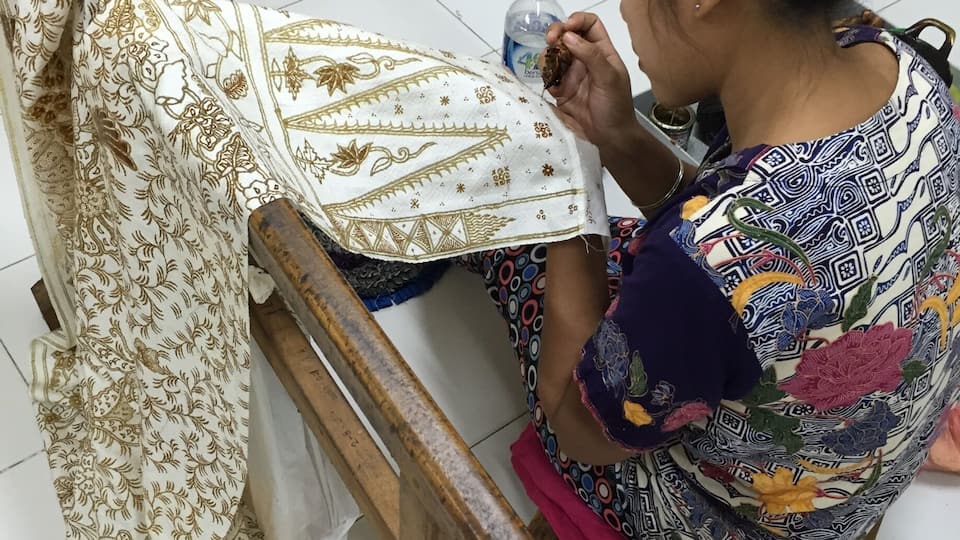
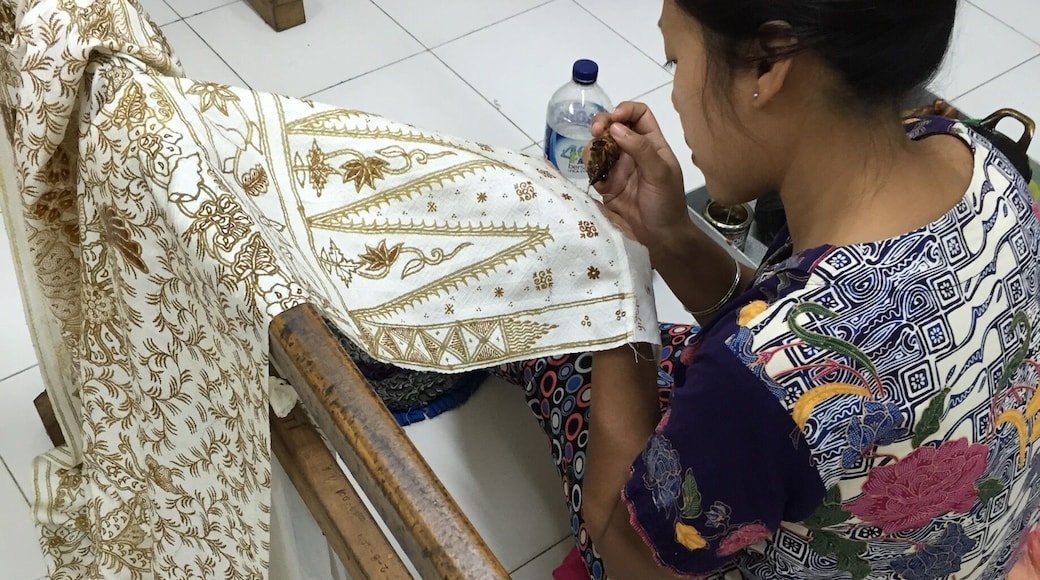
![At the museum no photos are allowed which is really unfortunate as it was well worth the visit and the guided tour is definitely not to be missed. In the museum there are even Batik made from the Dutch era which depicts stories like Little Red Riding Hood and Snow White!
I enjoyed the tour v much and at the end of the tour we were brought to this room where the artisan were working on hand drawn batik.
Below is an excerpt from Wikipedia for anyone interested in learning more about the process of batik making.
Firstly, a cloth is washed, soaked and beaten with a large mallet. Patterns are drawn with pencil and later redrawn using hot wax, usually made from a mixture of paraffin or bees wax, sometimes mixed with plant resins, which functions as a dye-resist. The wax can be applied with a variety of tools. A pen-like instrument called a canting (IPA: [tʃantiŋ], sometimes spelled with old Dutch orthography tjanting) is the most common. A canting is made from a small copper reservoir with a spout on a wooden handle. The reservoir holds the resist which flows through the spout, creating dots and lines as it moves. For larger patterns, a stiff brush may be used. Alternatively, a copper block stamp called a cap (IPA: [tʃap]; old spelling tjap) is used to cover large areas more efficiently.
After the cloth is dry, the resist is removed by scraping or boiling the cloth. The areas treated with resist keep their original color; when the resist is removed the contrast between the dyed and undyed areas forms the pattern. This process is repeated as many times as the number of colors desired.
The most traditional type of batik, called batik tulis (written batik), is drawn using only the canting. The cloth need to be drawn on both sides and dipped in a dye bath three to four times. The whole process may take up to a year; it yields considerably finer patterns than stamped batik.
Source: Wikipedia](https://images.trvl-media.com/place/6224808/26fd1460-c65a-4c1a-9444-7a893e883ac9.jpg?impolicy=fcrop&w=1040&h=580&q=mediumHigh)

阿里索羅賈瓦酒店
2月2日 至 2月3日 價格為每晚 HK$470
HK$470
合共 HK$569
2 月 2 日 - 2 月 3 日
連稅及其他費用
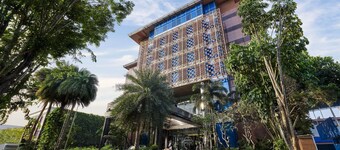
歡迎在梭羅入住此豪華酒店。這裡備有免費 Wi-Fi、免費泊車及全方位 SPA任你盡享。梭羅廣場及UMS等熱門景點就在附近。
9.2/10 Wonderful! (136 則評價)
商業出差選擇
酒店整體服務高質素,價格不算太高,尚可接受,員工服務態度良好,位置適中、距離機場約20-30分鐘車程,唯獨欠缺大型購物商場在酒店內,要步行10分鐘左右到另一商場購物用膳,但整體酒店良好,值得商業出差選擇。
評價日期:2018 年 2 月 25 日

Solo Moxy 飯店
Jl. Slamet Riyadi No.173, Kemlayan Surakarta Central Java
2月18日 至 2月19日 價格為每晚 HK$255
HK$255
合共 HK$308
2 月 18 日 - 2 月 19 日
連稅及其他費用
歡迎在梭羅入住此酒店。這裡備有免費 Wi-Fi、免費泊車及早餐 (收費)任你盡享。Radya 博物館圖書館及Mangkunegaran Palace 公爵領地等熱門景點就在附近。
9.2/10 Wonderful! (7 則評價)
It was a chic and clean hotel in the center of the city. The staff was very friendly.
評價日期:2024 年 12 月 28 日

梭羅皇家遺產手寫系列飯店
Jalan Slamet Riyadi No. 06 Surakarta Central Java
1月29日 至 1月30日 價格為每晚 HK$223
HK$223
合共 HK$270
1 月 29 日 - 1 月 30 日
連稅及其他費用
歡迎在梭羅入住此豪華酒店。這裡備有免費 Wi-Fi、免費泊車及全方位 SPA任你盡享。阿貢清真寺及格德市場等熱門景點就在附近。
8.2/10 Very Good! (166 則評價)
不錯的選擇
房間寬敞,非常清潔,陳設典雅,不過有些殘舊。自助早餐可以。晚餐不錯,價錢相宜。
評價日期:2018 年 11 月 3 日
過去 24 小時內找到的最低每晚價格 (2 位成人 1 晚)。價格及供應情況可能會出現變動。可能設有其他條款。
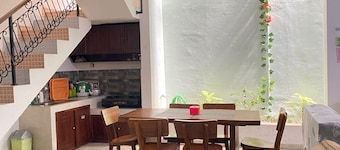
Solo ZG 家庭旅館
No.8-4 Jl. Pajajaran I Surakarta Jawa Tengah
歡迎在梭羅入住此別墅。這裡備有免費 Wi-Fi任你盡享。巴勒甘班城市公園及百麗宮索羅時尚生活購物中心等熱門景點就在附近。

梭羅 ZG 家庭旅館
1 Jl. Pajajaran Surakarta Jawa Tengah
歡迎在梭羅入住此別墅。這裡備有每日清潔服務、花園及店內單車租借服務任你盡享。巴勒甘班城市公園及梭羅廣場等熱門景點就在附近。
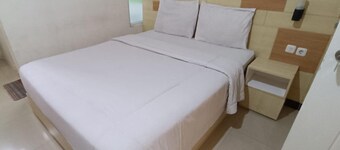
達旺曼古 Ulya 小屋酒店
Pleseran, Kalisoro, 5 Tawangmangu Jawa Tengah
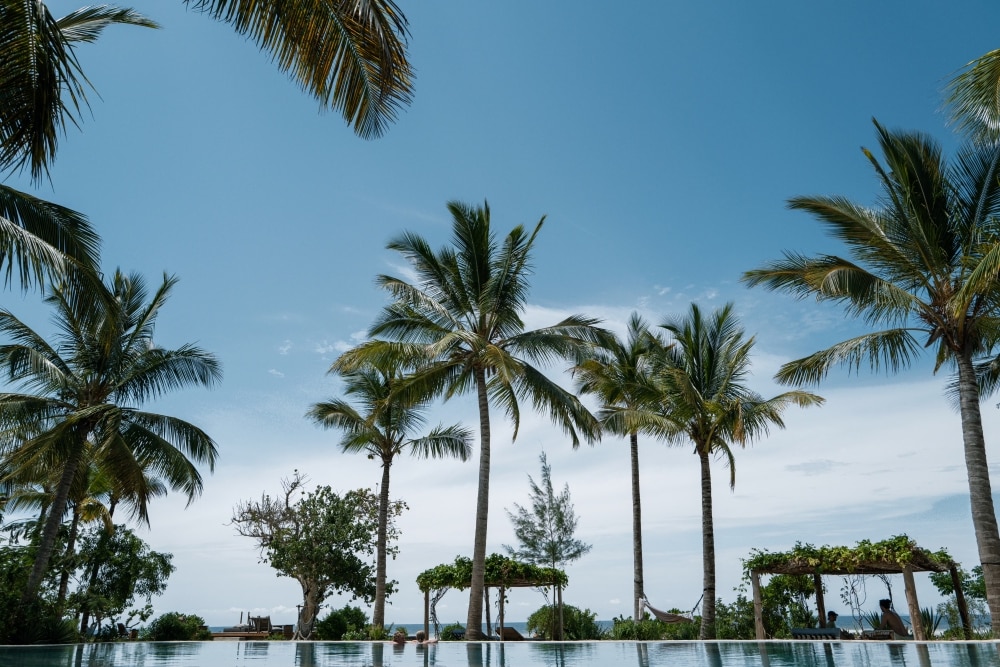
歡迎在塔旺曼古入住此木屋。這裡備有免費 Wi-Fi、免費泊車及私人泳池任你盡享。Wisata Bukit Sekipan及格羅佐安斯夫瀑布等熱門景點就在附近。
過去 24 小時內找到的最低每晚價格 (2 位成人 1 晚)。價格及供應情況可能會出現變動。可能設有其他條款。
熱門景點
Mangkunegaran Palace 公爵領地
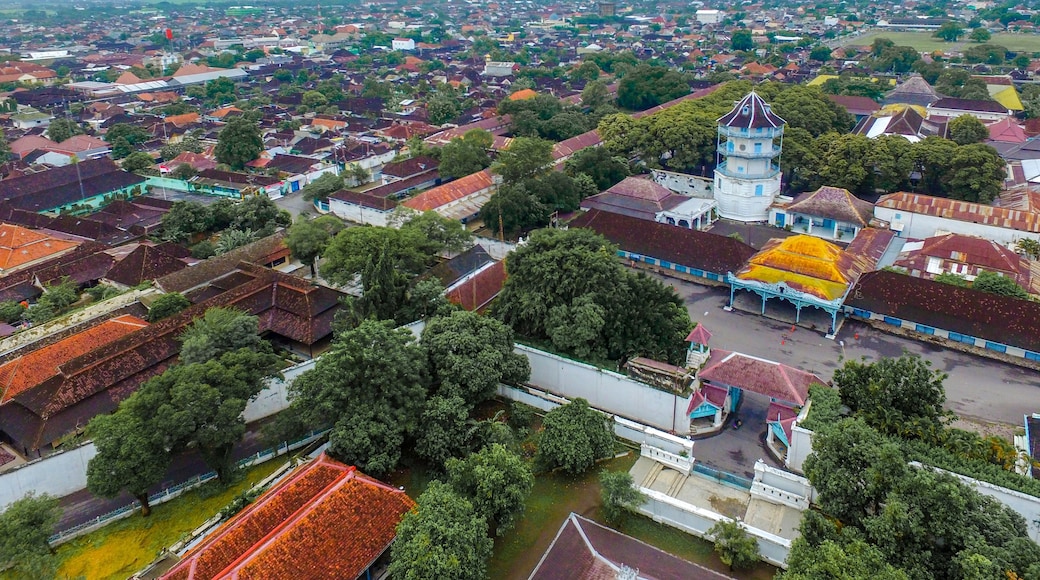
Mangkunegaran Palace 公爵領地只是梭羅其中一個景點,你又怎能錯過其他好玩的地方?想了解這個濃厚文化地區,體驗當地的博物館和音樂劇院就是其中一個最佳辦法。
![At the museum no photos are allowed which is really unfortunate as it was well worth the visit and the guided tour is definitely not to be missed. In the museum there are even Batik made from the Dutch era which depicts stories like Little Red Riding Hood and Snow White!
I enjoyed the tour v much and at the end of the tour we were brought to this room where the artisan were working on hand drawn batik.
Below is an excerpt from Wikipedia for anyone interested in learning more about the process of batik making.
Firstly, a cloth is washed, soaked and beaten with a large mallet. Patterns are drawn with pencil and later redrawn using hot wax, usually made from a mixture of paraffin or bees wax, sometimes mixed with plant resins, which functions as a dye-resist. The wax can be applied with a variety of tools. A pen-like instrument called a canting (IPA: [tʃantiŋ], sometimes spelled with old Dutch orthography tjanting) is the most common. A canting is made from a small copper reservoir with a spout on a wooden handle. The reservoir holds the resist which flows through the spout, creating dots and lines as it moves. For larger patterns, a stiff brush may be used. Alternatively, a copper block stamp called a cap (IPA: [tʃap]; old spelling tjap) is used to cover large areas more efficiently.
After the cloth is dry, the resist is removed by scraping or boiling the cloth. The areas treated with resist keep their original color; when the resist is removed the contrast between the dyed and undyed areas forms the pattern. This process is repeated as many times as the number of colors desired.
The most traditional type of batik, called batik tulis](https://images.trvl-media.com/place/6224808/26fd1460-c65a-4c1a-9444-7a893e883ac9.jpg?impolicy=fcrop&w=350&h=192&q=medium)