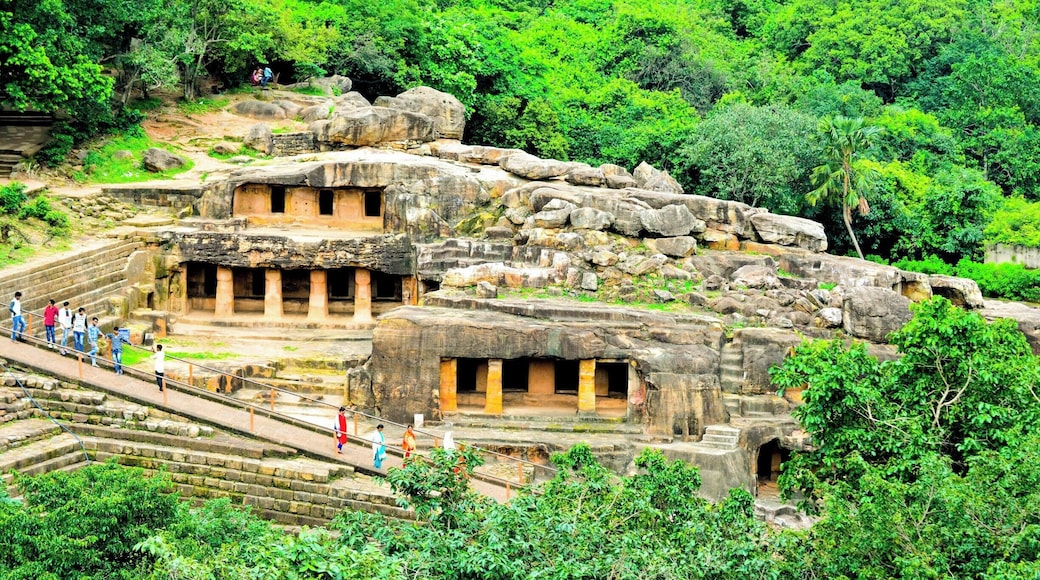
乌代吉里和坎达吉里洞穴

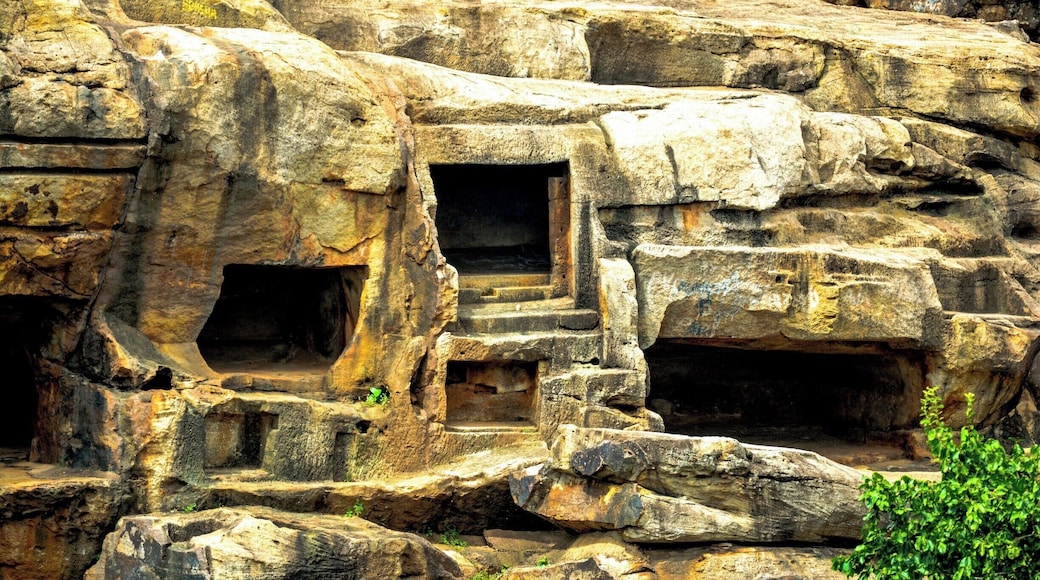
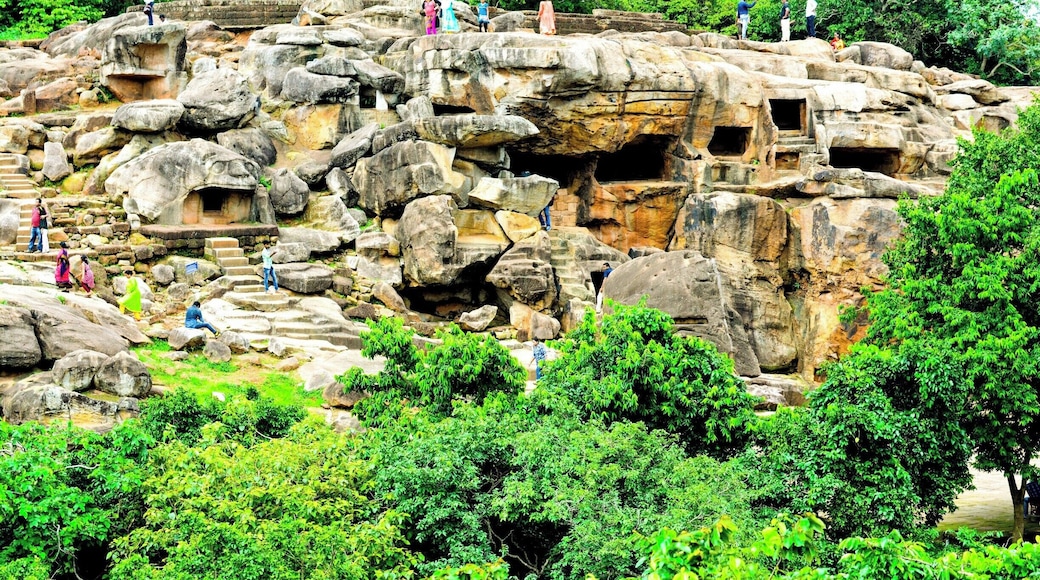
Udayagiri and Khandagiri Caves are partly natural and partly artificial caves of archaeological, historical and religious importance near the city of Bhubaneswar in Odisha, India. The caves are situated on two adjacent hills, Udayagiri and Khandagiri, mentioned as Kumari Parvat in the Hathigumpha inscription. They have a number of finely and ornately carved caves built during 2nd century BCE. It is believed that most of these caves were carved out as residential blocks for Jain monks during the reign of King Kharavela. Udayagiri means "Sunrise Hill" and has 18 caves while Khandagiri has 15 caves.

The caves of Udayagiri and Khandagiri, called lena or leṇa in the inscriptions, were dug out mostly during the reign of Kharavela for the abode of Jaina ascetics. The most important of this group is Ranigumpha in Udayagiri which is a double storeyed monastery. Other important caves include Hathi gumpha, Ananta gumpha, Ganesha gumpha, Jaya Vijaya gumpha, Mancapuri gumpha, Bagh gumpha and Sarpa gumpha.
Udayagiri and Khandagiri Caves are partly natural and partly artificial caves of archaeological, historical and religious importance near the city of Bhubaneswar in Odisha, India. The caves are situated on two adjacent hills, Udayagiri and Khandagiri, mentioned as Kumari Parvat in the Hathigumpha inscription. They have a number of finely and ornately carved caves built during 2nd century BCE. It is believed that most of these caves were carved out as residential blocks for Jain monks during the reign of King Kharavela. Udayagiri means "Sunrise Hill" and has 18 caves while Khandagiri has 15 caves.

The caves of Udayagiri and Khandagiri, called lena or leṇa in the inscriptions, were dug out mostly during the reign of Kharavela for the abode of Jaina ascetics. The most important of this group is Ranigumpha in Udayagiri which is a double storeyed monastery. Other important caves include Hathi gumpha, Ananta gumpha, Ganesha gumpha, Jaya Vijaya gumpha, Mancapuri gumpha, Bagh gumpha and Sarpa gumpha.
Udayagiri and Khandagiri Caves are partly natural and partly artificial caves of archaeological, historical and religious importance near the city of Bhubaneswar in Odisha, India. The caves are situated on two adjacent hills, Udayagiri and Khandagiri, mentioned as Kumari Parvat in the Hathigumpha inscription. They have a number of finely and ornately carved caves built during 2nd century BCE.[1] It is believed that most of these caves were carved out as residential blocks for Jain monks during the reign of King Kharavela.[2] Udayagiri means "Sunrise Hill" and has 18 caves while Khandagiri has 15 caves.[3]

The caves of Udayagiri and Khandagiri, called lena or leṇa in the inscriptions, were dug out mostly during the reign of Kharavela for the abode of Jaina ascetics. The most important of this group is Ranigumpha in Udayagiri which is a double storeyed monastery. Other important caves include Hathi gumpha, Ananta gumpha, Ganesha gumpha, Jaya Vijaya gumpha, Mancapuri gumpha, Bagh gumpha and Sarpa gumpha.
Udayagiri and Khandagiri Caves are partly natural and partly artificial caves of archaeological, historical and religious importance near the city of Bhubaneswar in Odisha, India. The caves are situated on two adjacent hills, Udayagiri and Khandagiri, mentioned as Kumari Parvat in the Hathigumpha inscription. They have a number of finely and ornately carved caves built during 2nd century BCE.[1] It is believed that most of these caves were carved out as residential blocks for Jain monks during the reign of King Kharavela.[2] Udayagiri means "Sunrise Hill" and has 18 caves while Khandagiri has 15 caves.[3]

The caves of Udayagiri and Khandagiri, called lena or leṇa in the inscriptions, were dug out mostly during the reign of Kharavela for the abode of Jaina ascetics. The most important of this group is Ranigumpha in Udayagiri which is a double storeyed monastery. Other important caves include Hathi gumpha, Ananta gumpha, Ganesha gumpha, Jaya Vijaya gumpha, Mancapuri gumpha, Bagh gumpha and Sarpa gumpha.
Udayagiri and Khandagiri Caves are partly natural and partly artificial caves of archaeological, historical and religious importance near the city of Bhubaneswar in Odisha, India. The caves are situated on two adjacent hills, Udayagiri and Khandagiri, mentioned as Kumari Parvat in the Hathigumpha inscription. They have a number of finely and ornately carved caves built during 2nd century BCE. It is believed that most of these caves were carved out as residential blocks for Jain monks during the reign of King Kharavela. Udayagiri means "Sunrise Hill" and has 18 caves while Khandagiri has 15 caves.

The caves of Udayagiri and Khandagiri, called lena or leṇa in the inscriptions, were dug out mostly during the reign of Kharavela for the abode of Jaina ascetics. The most important of this group is Ranigumpha in Udayagiri which is a double storeyed monastery. Other important caves include Hathi gumpha, Ananta gumpha, Ganesha gumpha, Jaya Vijaya gumpha, Mancapuri gumpha, Bagh gumpha and Sarpa gumpha.


热门景点


热门酒店优惠

Treebo机场旅馆

Treebo机场旅馆

3 out of 5
Plot no-1485 Friends Colony, Baramunda Bhubaneshwar Bhubaneshwar
Treebo机场旅馆
Hotel Jayadeep 酒店

Hotel Jayadeep 酒店

3 out of 5
Ghatikia Bhubaneshwar OR
Hotel Jayadeep 酒店
萨蒂亚酒店

萨蒂亚酒店

2 out of 5
2/C Jagmohan Nagar Bhubaneshwar OD
萨蒂亚酒店
ANXX酒店

ANXX酒店

2 out of 5
OYO Sambit Nx Bhubaneshwar OR
ANXX酒店
基于过去 24 小时内找到的、2 位成人 1 晚住宿的每晚最低价格。价格和供应情况可能会有所变动。可能需遵守其他条款。