整間出租公寓
Amazing villa in gardens Center Piazza Popolo / Spagna
Amazing villa in gardens Center Piazza Popolo / Spagna相片集


評價
9.69.6 分,滿分 10 分,
完美
整間出租公寓
人氣設施服務
- 浴缸
- 廚房
- 洗衣機
- 空調
- 戶外空間
- 提供車位
加入日期以查看價格
住宿資料
Amazing villa in gardens Center Piazza Popolo / Spagna
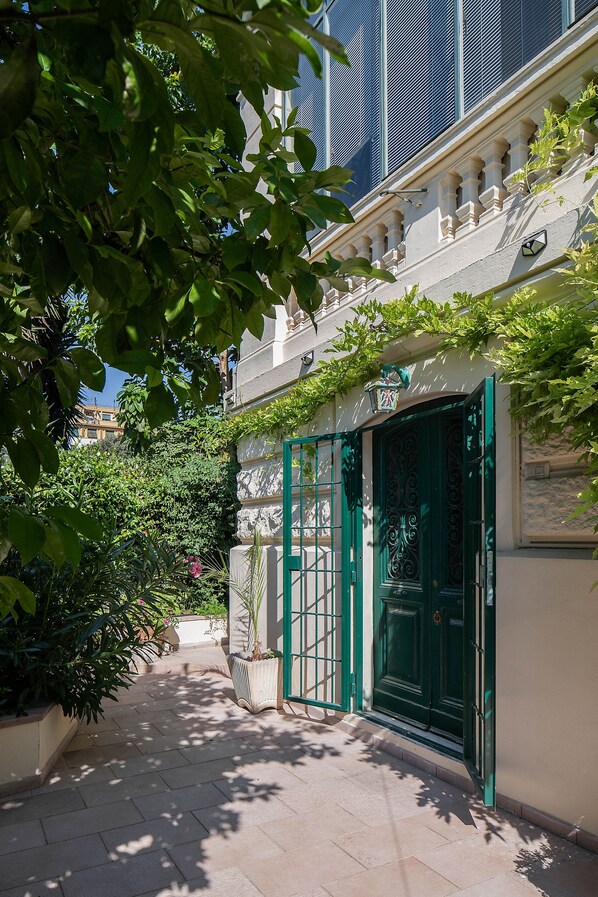
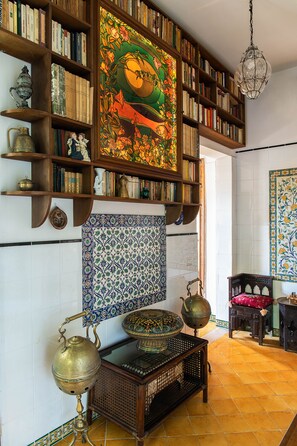
Beautiful apartment of 120 m2 with garden for rent in a high-end property, with concierge. This ground floor apartment was renovated in 2008; it has a large entrance living room, large kitchen with direct access to the garden, two bedrooms, two bathrooms, hallway and additional mezzanine / storage space. The garden measures 90 m2.
It is surrounded by other gardens and is at the foot of Villa Balestra, a rock painted by Raphael.
On the avenue delle Belle Arti is the most important Etruscan Museum in the world, in the magnificent Villa of the Papae Julius II. The Museum of Modern Art is a little further and all the buildings on this avenue are Academies from many countries: Japan, Austria etc.
The apartment is ideally located about 500 meters (5 minutes) from Piazza del Popolo in the Parioli district. Parking space always available on the same street, no other houses / apartments nearby.
200 euros / night, 25 eur for each additional person
We also offer Venice and France!
Between the elegant Pincio and the banks of the Tiber, Piazza del Popolo forms a huge ellipse. Churches, fountains, monuments, of ancient and modern Rome embellish the place.
Since ancient times, the northern entrance to the city has formed a vestibule in the city through the door in the wall of Aurélien. Although now known as Porta del Popolo, it has had several names over the centuries.
Originally called Porta Flaminia by the Emperor Aurelian who commissioned its construction, during the early medieval period it was called Porta San Valentino, after the nearest catacomb. Finally, the name of Porta del Popolo was agreed, as was the church adjoining the eastern gate of Santa Maria del Popolo.
Piazza del Popolo itself was known as Piazza del Trullo in the Middle Ages, after the conical fountain in the center of the square, reminiscent of a characteristic South Italian habitation. Its current name may be due to poplar, known in Latin 'populus' which also meant people, an apt association, as various public events such as fairs, games and spectacular performances were held there.
For centuries, Piazza del Popolo had a public fountain, a drinking trough and a cistern for washerwomen. It was Sixtus V, in 1589, who turned his attention instead. The Trullo fountain, under the supervision and execution of Domenico Fontana, was to be replaced by the Egyptian obelisk of Ramses II, second in age and height than that of San Giovanni, originally brought to the city by Emperor Augustus, and put in Circus Maximus.
Its transport and installation in Piazza del Popolo gave the place a more majestic, less domestic air. Four lions of water basins were added to the obelisk in 1823, during the reign of Pope Leo XII.
The next event was the arrival of Queen Christine of Sweden. Eager to convert to Catholicism, she arrived in Rome in 1655, to a splendid reception: coming from the North, her first vision was the Porta del Popolo.
Bernini had been commissioned to restore the interior facade of the old door in preparation for his arrival. A plaque has been placed above the arch, reading: 'FELICI FAUSTOQUE INGRESSUI MDCLV' (For a Happy and Auspicious Entry) which remains to this day. Her entry was so 'happy' that she would never leave Rome.
Towards the end of the seventeen hundreds, in the midst of the Napoleonic invasion, the ever-increasing flow of visitors and pilgrims, who descended on Rome through the Porta del Popolo, motivated the decision to modernize the place.
Until the 18th century, the square has a trapezoidal shape which converged towards the door. During the Napoleonic era, the French prefect, Tournon, was the head of the 'Embellishments Commission' in Rome.
He commissioned Valadier, a Roman architect, to redesign the Piazza del Popolo, which he did has a surprising effect. The works started in 1816, lasted until 1824 and the first time, since the French occupation, that the prisoners were not used for the works.
The project had to take into account important existing buildings: three churches, Santa Maria del Popolo, Santa Maria di Montesanto (Saint Mary of Montesanto), Santa Maria dei Miracoli (Saint Mary of Miracles), the obelisk, Porta del Popolo and Via del Corso, which was to remain intact.
The lateral structures were replaced by spacious exedres. These supported the fountains of Neptune between two newts, and Roma Goddess on each side, added in 1823 during the reign of Pope Leo XII. The square then became accessible from side to side, as well as each end.
With a touch of genius, the square was connected to the park on the hill above by a staircase descending from the Pincio hill. Piazza del Popolo was the pope's last contribution to the legendary architecture of Rome, and in many ways reflects its splendor, inspiring a sense of fear in the visitor.
Highlighting this supremacy, the three churches dedicated to the Virgin, surrounded by the obelisk which in ancient times was dedicated to the pagan Sun god.
It is surrounded by other gardens and is at the foot of Villa Balestra, a rock painted by Raphael.
On the avenue delle Belle Arti is the most important Etruscan Museum in the world, in the magnificent Villa of the Papae Julius II. The Museum of Modern Art is a little further and all the buildings on this avenue are Academies from many countries: Japan, Austria etc.
The apartment is ideally located about 500 meters (5 minutes) from Piazza del Popolo in the Parioli district. Parking space always available on the same street, no other houses / apartments nearby.
200 euros / night, 25 eur for each additional person
We also offer Venice and France!
Between the elegant Pincio and the banks of the Tiber, Piazza del Popolo forms a huge ellipse. Churches, fountains, monuments, of ancient and modern Rome embellish the place.
Since ancient times, the northern entrance to the city has formed a vestibule in the city through the door in the wall of Aurélien. Although now known as Porta del Popolo, it has had several names over the centuries.
Originally called Porta Flaminia by the Emperor Aurelian who commissioned its construction, during the early medieval period it was called Porta San Valentino, after the nearest catacomb. Finally, the name of Porta del Popolo was agreed, as was the church adjoining the eastern gate of Santa Maria del Popolo.
Piazza del Popolo itself was known as Piazza del Trullo in the Middle Ages, after the conical fountain in the center of the square, reminiscent of a characteristic South Italian habitation. Its current name may be due to poplar, known in Latin 'populus' which also meant people, an apt association, as various public events such as fairs, games and spectacular performances were held there.
For centuries, Piazza del Popolo had a public fountain, a drinking trough and a cistern for washerwomen. It was Sixtus V, in 1589, who turned his attention instead. The Trullo fountain, under the supervision and execution of Domenico Fontana, was to be replaced by the Egyptian obelisk of Ramses II, second in age and height than that of San Giovanni, originally brought to the city by Emperor Augustus, and put in Circus Maximus.
Its transport and installation in Piazza del Popolo gave the place a more majestic, less domestic air. Four lions of water basins were added to the obelisk in 1823, during the reign of Pope Leo XII.
The next event was the arrival of Queen Christine of Sweden. Eager to convert to Catholicism, she arrived in Rome in 1655, to a splendid reception: coming from the North, her first vision was the Porta del Popolo.
Bernini had been commissioned to restore the interior facade of the old door in preparation for his arrival. A plaque has been placed above the arch, reading: 'FELICI FAUSTOQUE INGRESSUI MDCLV' (For a Happy and Auspicious Entry) which remains to this day. Her entry was so 'happy' that she would never leave Rome.
Towards the end of the seventeen hundreds, in the midst of the Napoleonic invasion, the ever-increasing flow of visitors and pilgrims, who descended on Rome through the Porta del Popolo, motivated the decision to modernize the place.
Until the 18th century, the square has a trapezoidal shape which converged towards the door. During the Napoleonic era, the French prefect, Tournon, was the head of the 'Embellishments Commission' in Rome.
He commissioned Valadier, a Roman architect, to redesign the Piazza del Popolo, which he did has a surprising effect. The works started in 1816, lasted until 1824 and the first time, since the French occupation, that the prisoners were not used for the works.
The project had to take into account important existing buildings: three churches, Santa Maria del Popolo, Santa Maria di Montesanto (Saint Mary of Montesanto), Santa Maria dei Miracoli (Saint Mary of Miracles), the obelisk, Porta del Popolo and Via del Corso, which was to remain intact.
The lateral structures were replaced by spacious exedres. These supported the fountains of Neptune between two newts, and Roma Goddess on each side, added in 1823 during the reign of Pope Leo XII. The square then became accessible from side to side, as well as each end.
With a touch of genius, the square was connected to the park on the hill above by a staircase descending from the Pincio hill. Piazza del Popolo was the pope's last contribution to the legendary architecture of Rome, and in many ways reflects its splendor, inspiring a sense of fear in the visitor.
Highlighting this supremacy, the three churches dedicated to the Virgin, surrounded by the obelisk which in ancient times was dedicated to the pagan Sun god.
住宿設施服務
泳池/SPA
- 1 個浴缸
網絡
- 公寓提供:Wi-Fi
泊車及交通
- 不須乘車
- 店內設有車位
廚房
- 多士爐
- 咖啡機/沖茶器
- 洗碗機
- 香料
- 焗爐
- 雪櫃
- 煮食用品、餐具和器皿
- 爐具
- 攪拌機
睡房
- 2 間睡房
- 提供床單
浴室
- 2 個浴室
- 坐浴桶
- 肥皂
- 花灑
- 風筒
- 浴缸或淋浴間
- 廁紙
- 提供毛巾
起居空間
- 客廳
- 獨立飯廳
娛樂
- 立體聲音響
- 書籍
- 智能電視
戶外區域
- 花園
洗衣設備
- 洗衣設施
- 洗衣機
舒適
- 空調
- 暖氣
寵物
- 不可攜帶寵物
合適程度/無障礙設施
- 如需特定無障礙設施,請參閱預訂確認內的資料與住宿聯絡。
- 單層住宿
- 禁煙住宿
服務及便利設施
- 有限清潔服務
- 熨斗/熨衫板
- 禮賓服務
地點特色
- 位處市中心
- 河畔
- 鄰近特賣場
- 鄰近動物園
休閒活動
- 鄰近主題公園
安全設施
- 一氧化碳檢測器 (屋主表示住宿設有一氧化碳檢測器)
- 煙霧探測器 (屋主表示住宿設有煙霧探測器)
- 門鎖
一般資訊
- 花園
- 單位尺寸:1,292 平方呎
類似住宿

伊利沙伯獨特公寓 - 設計酒店成員
羅馬市中心
伊利沙伯獨特公寓 - 設計酒店成員
羅馬市中心
- 廚房
- 免費 Wi-Fi
- 空調
- SPA
9.8 分 (滿分為 10 分),完美,8 則評價 篇評價
9.8
完美
8 則評價
現售 HK$8,600
HK$8,600
合共 HK$9,568
連稅及其他費用
4 月 21 日 - 4 月 22 日

舒適杜馬爾 - 我的家外之家酒店
梵蒂岡
舒適杜馬爾 - 我的家外之家酒店
梵蒂岡
- 廚房
- 空調
- 清潔服務
- 城景
9.4 分 (滿分為 10 分),完美,13 則評價 篇評價
9.4
完美
13 則評價

麻朵里民宿
羅馬市中心
麻朵里民宿
羅馬市中心
- 包早餐
- 免費 Wi-Fi
- 空調
- 清潔服務
9.8 分 (滿分為 10 分),完美,133 則評價 篇評價
9.8
完美
133 則評價

樹魅特里盧薩
羅馬市中心
樹魅特里盧薩
羅馬市中心
- 免費 Wi-Fi
- 空調
- 供應早餐
- 隔音房
8.6 分 (滿分為 10 分),優異,107 則評價 篇評價
8.6
優異
107 則評價
現售 HK$1,344
HK$1,344
合共 HK$1,587
連稅及其他費用
4 月 6 日 - 4 月 7 日